Eight steps, and a person’s hands on every one.
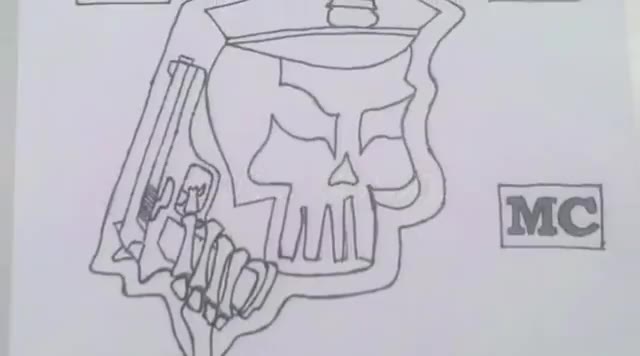
A different set, from the same starting point.
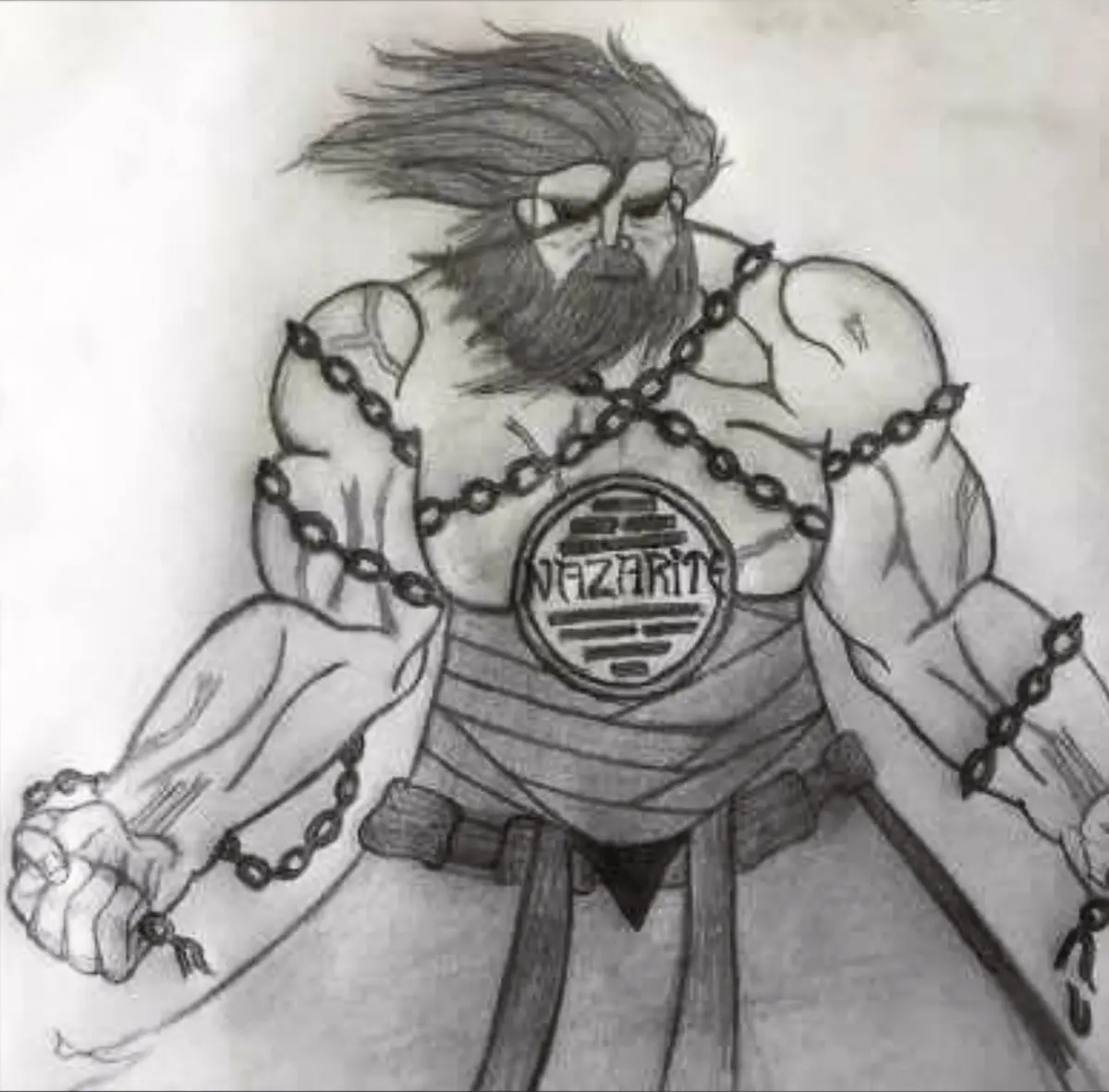
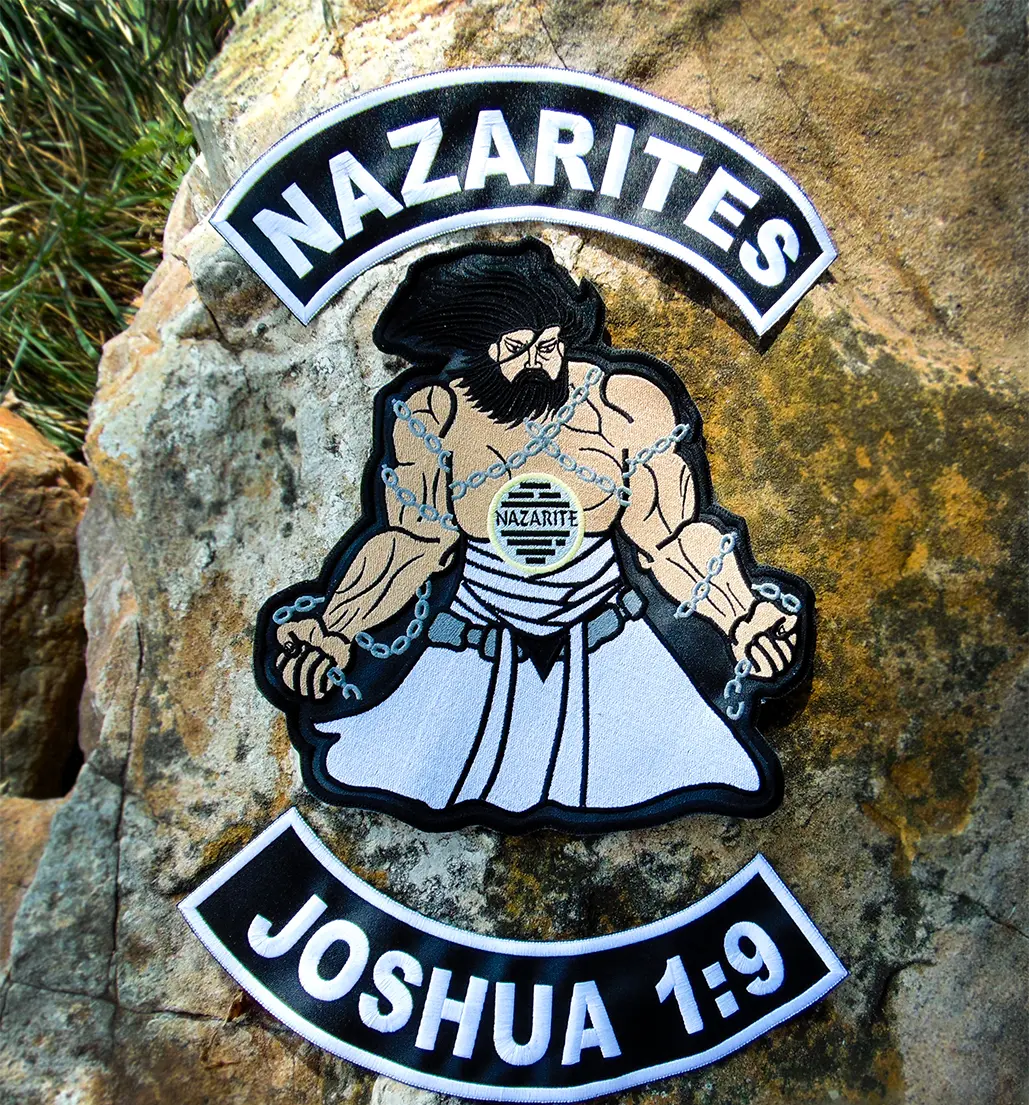
It starts with a photograph
Most orders arrive as a phone photo of an existing patch, a sketch on paper, or a logo file somebody found on a hard drive. That is enough. Send a picture and the approximate height and width and the rest is our problem.
We do not require vector artwork, and we do not charge extra to work from a photograph.
The file is plotted by hand
This is the step that decides whether a patch lies flat or puckers, and it is the step almost nobody sees.
Embroidery machines do not read pictures. They read instructions: where each stitch starts, where it ends, which direction the fill runs, what order the colors sew in. Turning artwork into those instructions is called digitizing, and most shops feed the image to software that traces it automatically and ship whatever comes out.
Every file here is plotted by hand, by a digitizer John has worked with for years. He sits with the artwork and decides where each stitch lands, how the fills interlock, and how much the design has to be compensated so that thread pulling against fabric still lands where it looked like it would on paper.
Auto-digitized patches are the ones that ripple, gap at the borders, and lose small lettering. That is not a machine problem. It is a file problem.
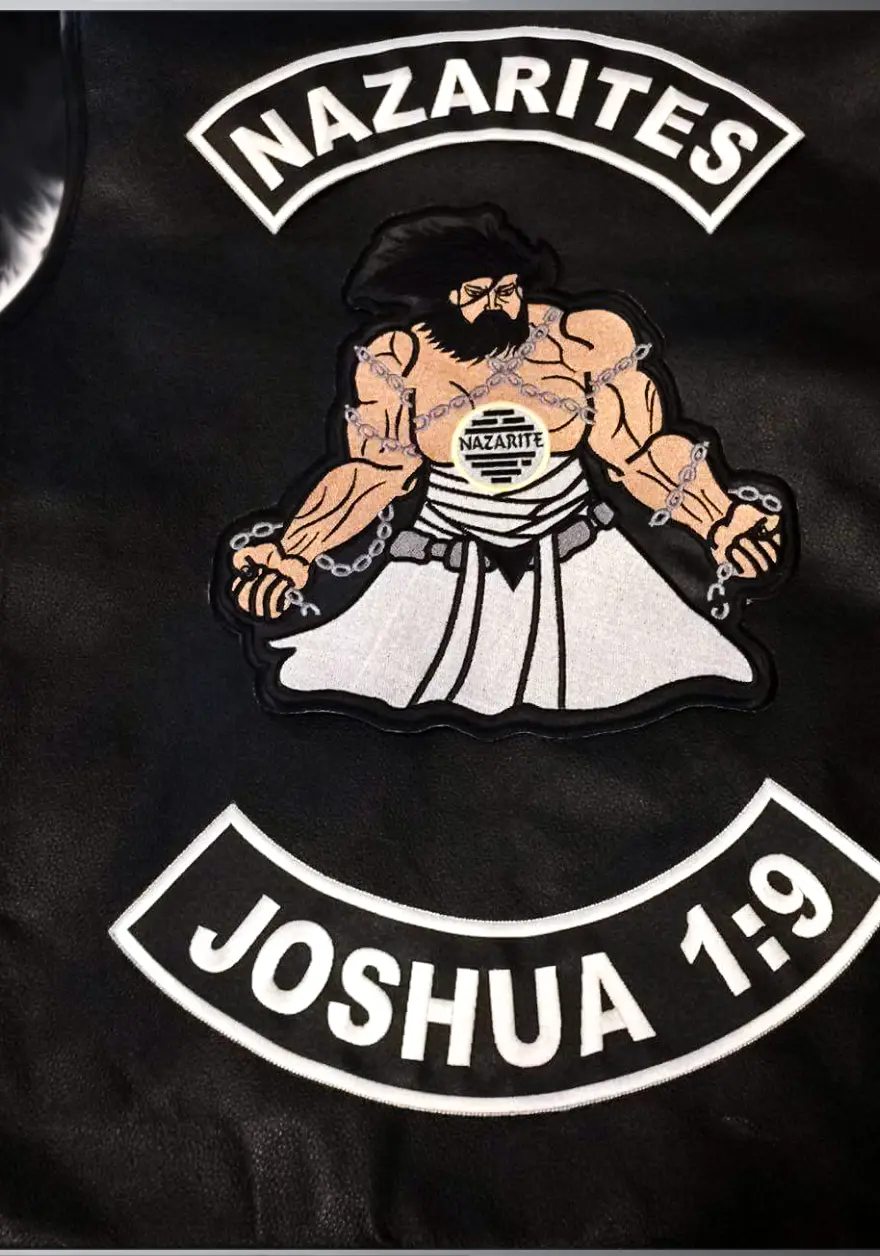
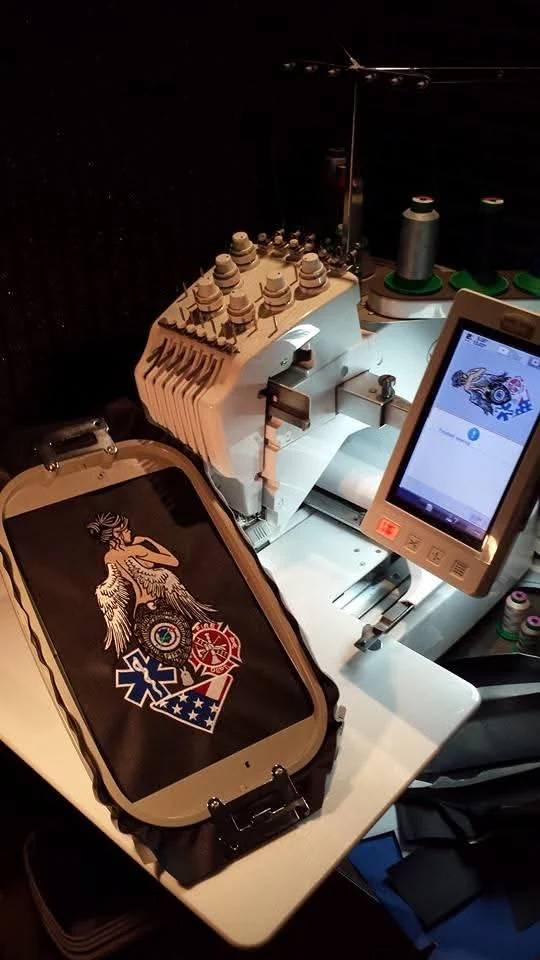
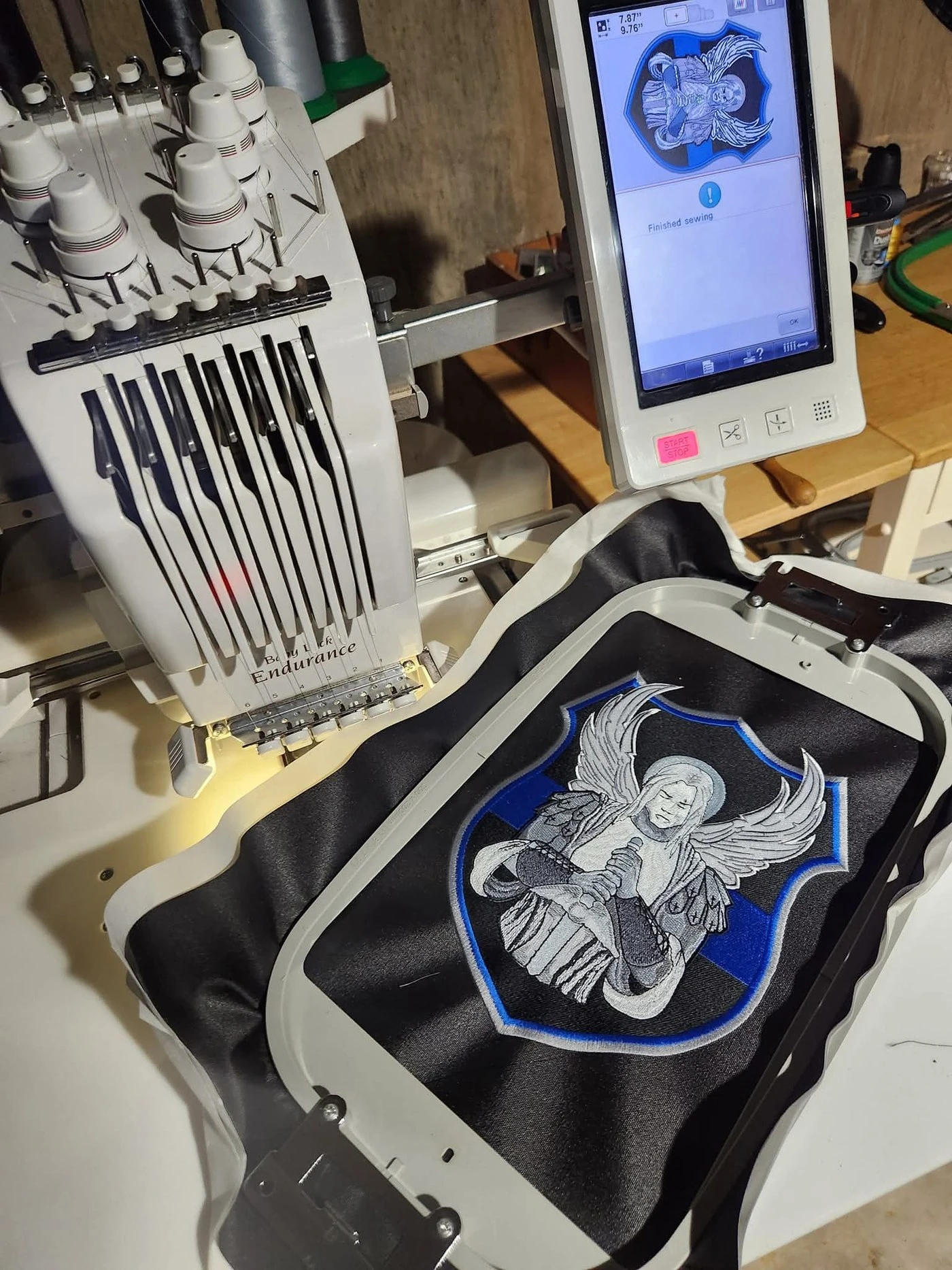
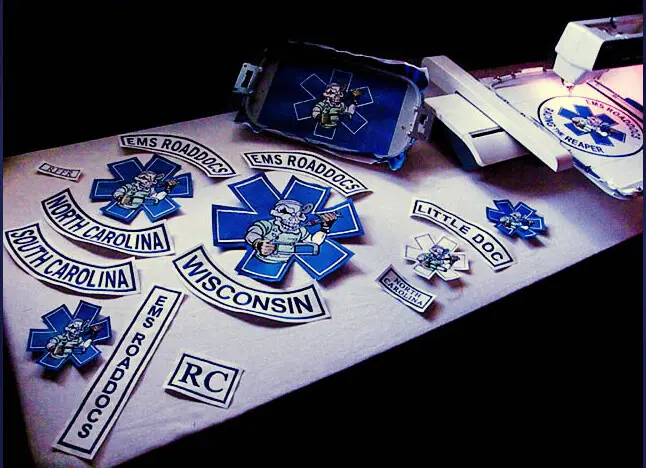
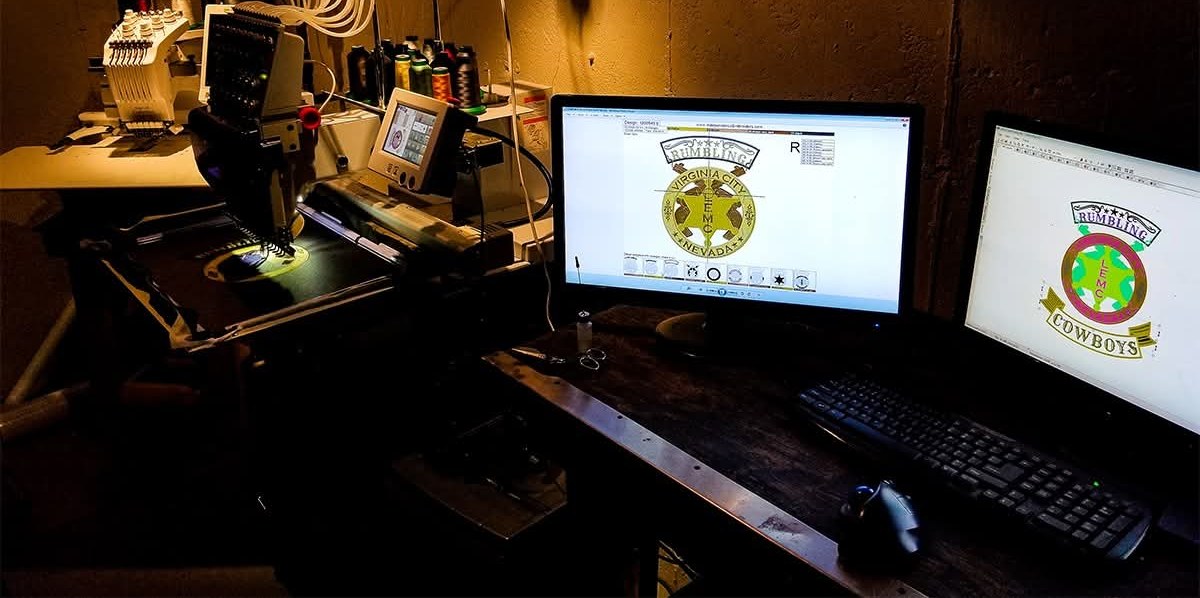 The same set, on screen and finished.
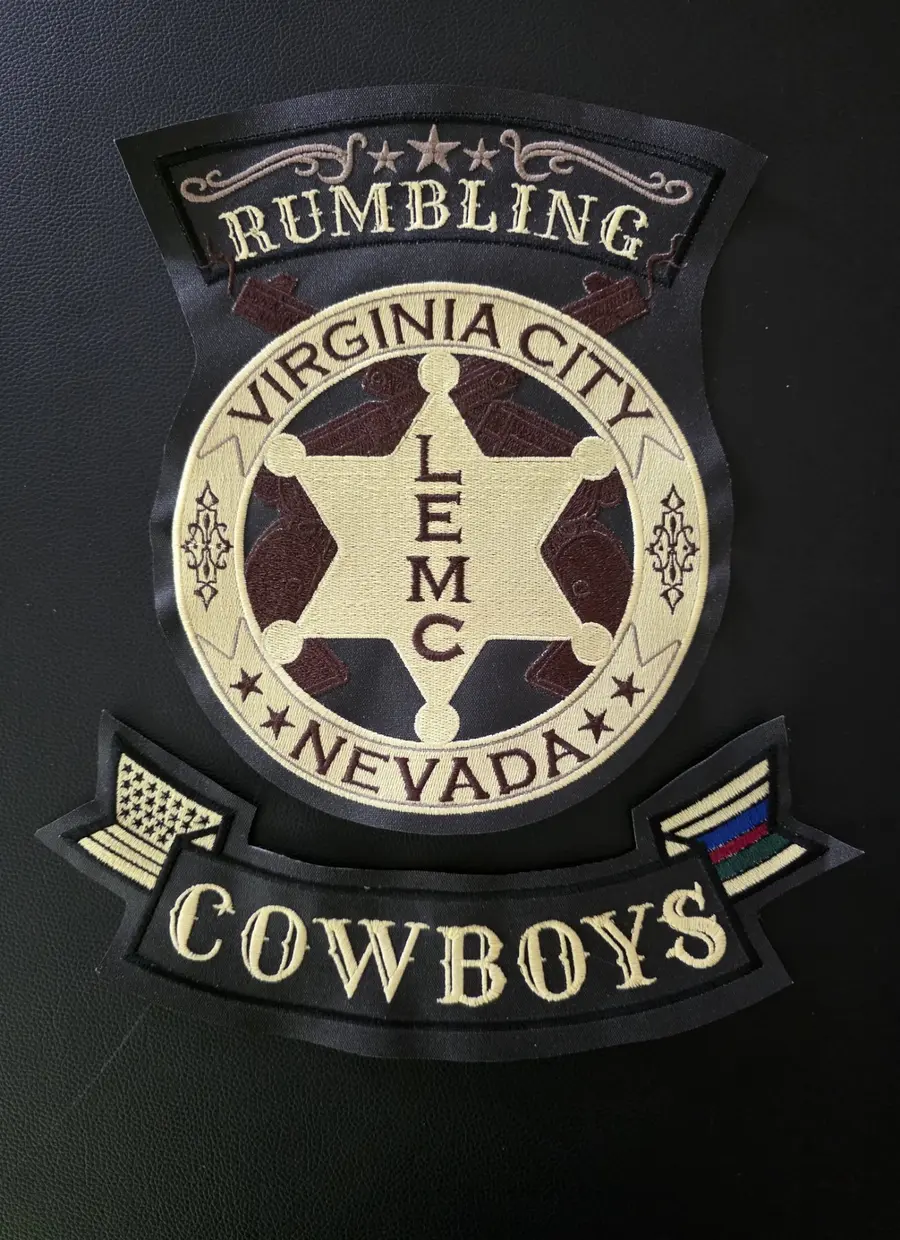 Three pieces from one run, laid out before they are cut apart.
You approve it before anything is sewn
You see the design before thread touches fabric. Changes at this stage cost nothing. Changes after stitching cost a patch.
The material
Colors are stitched onto acrylic coated poly blend twill, coated on both faces, from a Missouri mill about twenty miles from the shop. It is the same class of coated polyester specified for marine canvas and awnings, material built to sit outside in weather for years and not give up.
This matters more than it sounds. A set of colors lives on the back of a vest through road grime, exhaust heat, rain, and fifteen summers of UV. Cotton twill will not survive that. It fades, it wicks water, it goes soft at the edges by the third season, and the border is the first thing to go.
The coating is a property of the fabric, applied at the mill. We do not add to it, and we would not trust a coating we sprayed on ourselves over one that was engineered into the material.
Stitching
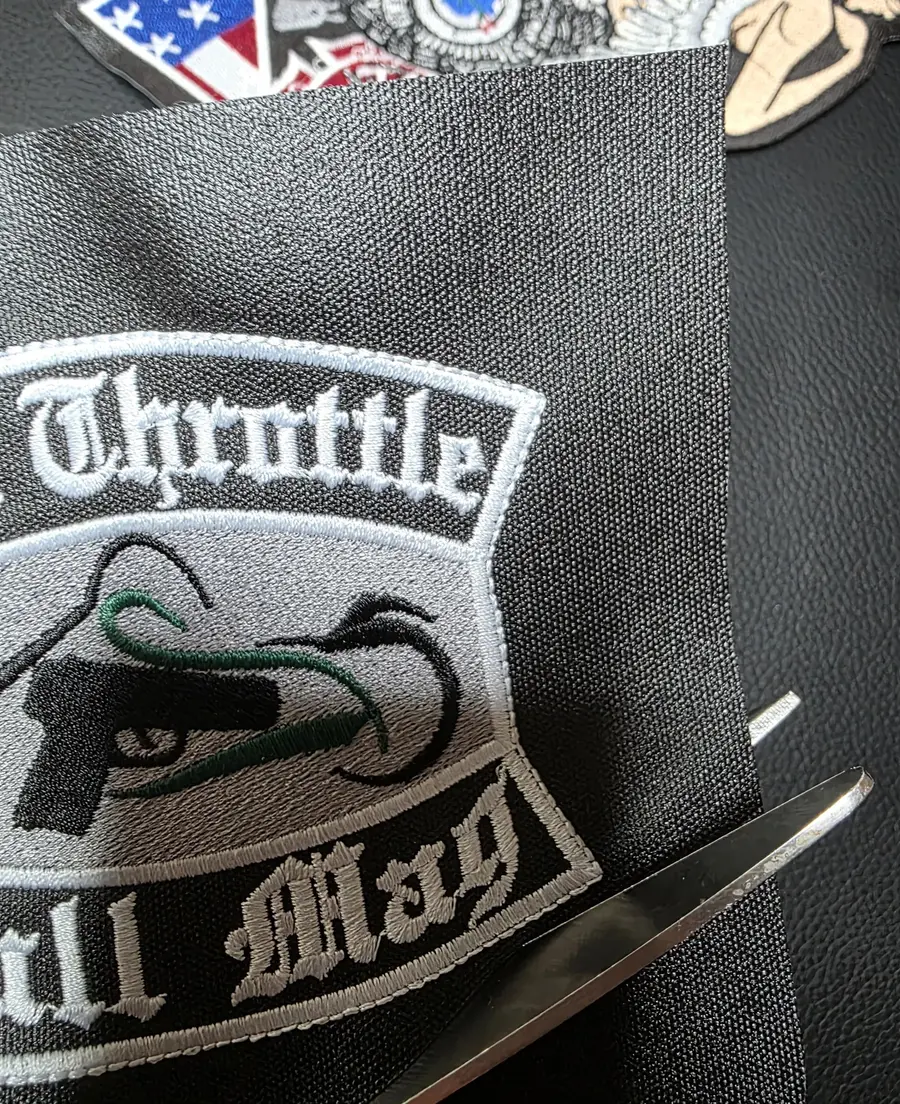
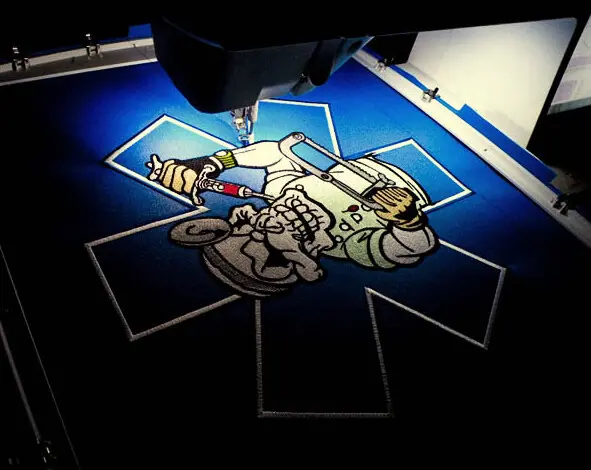
The design runs on the machine. Thread tension, needle, stabilizer, and speed are set for the specific piece, because a dense center patch and a name tab are not the same job.
Nothing is stitched in a hurry. The 24th patch takes the machine as long as the first one did.
Every edge is cut by hand
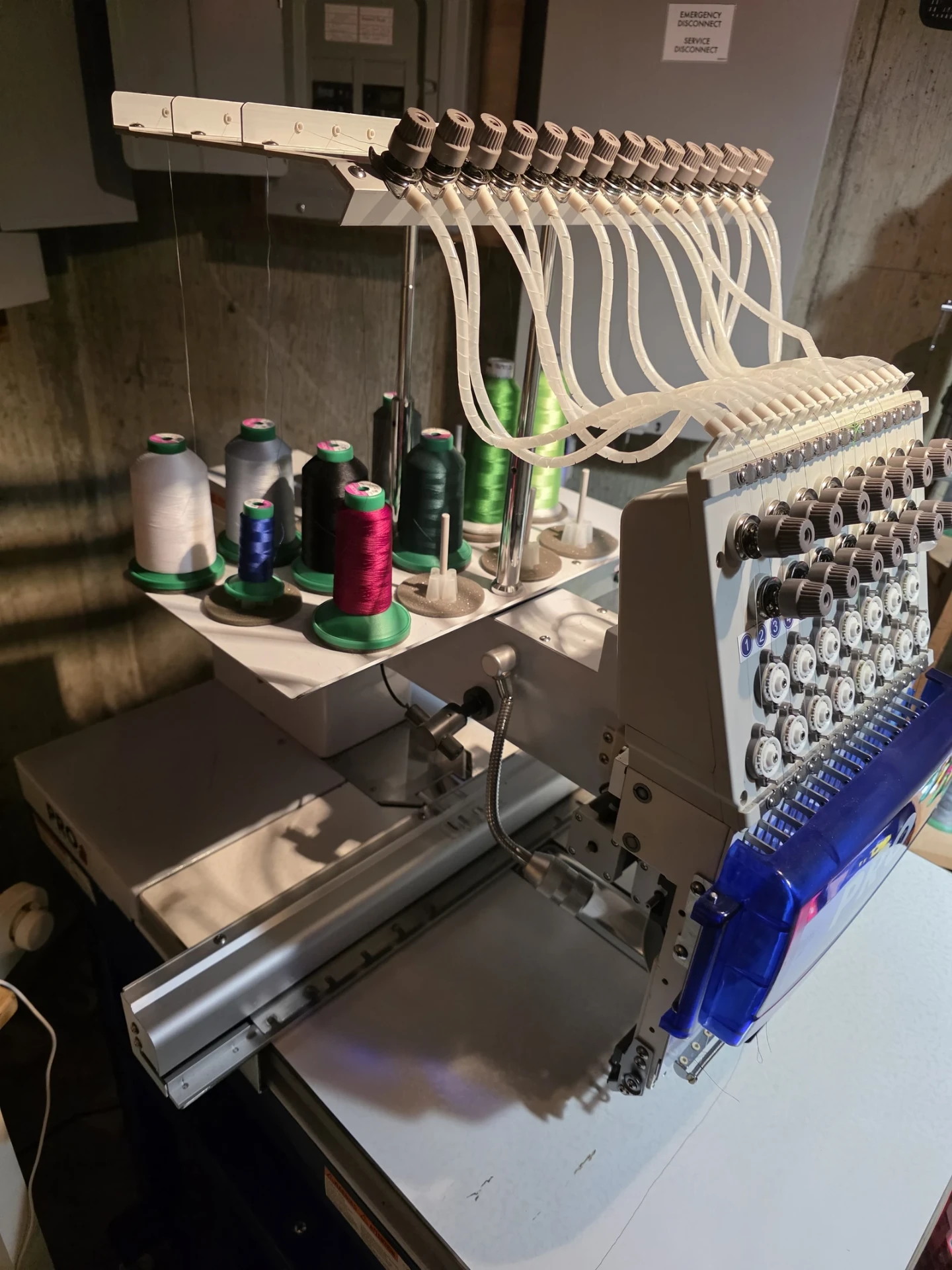
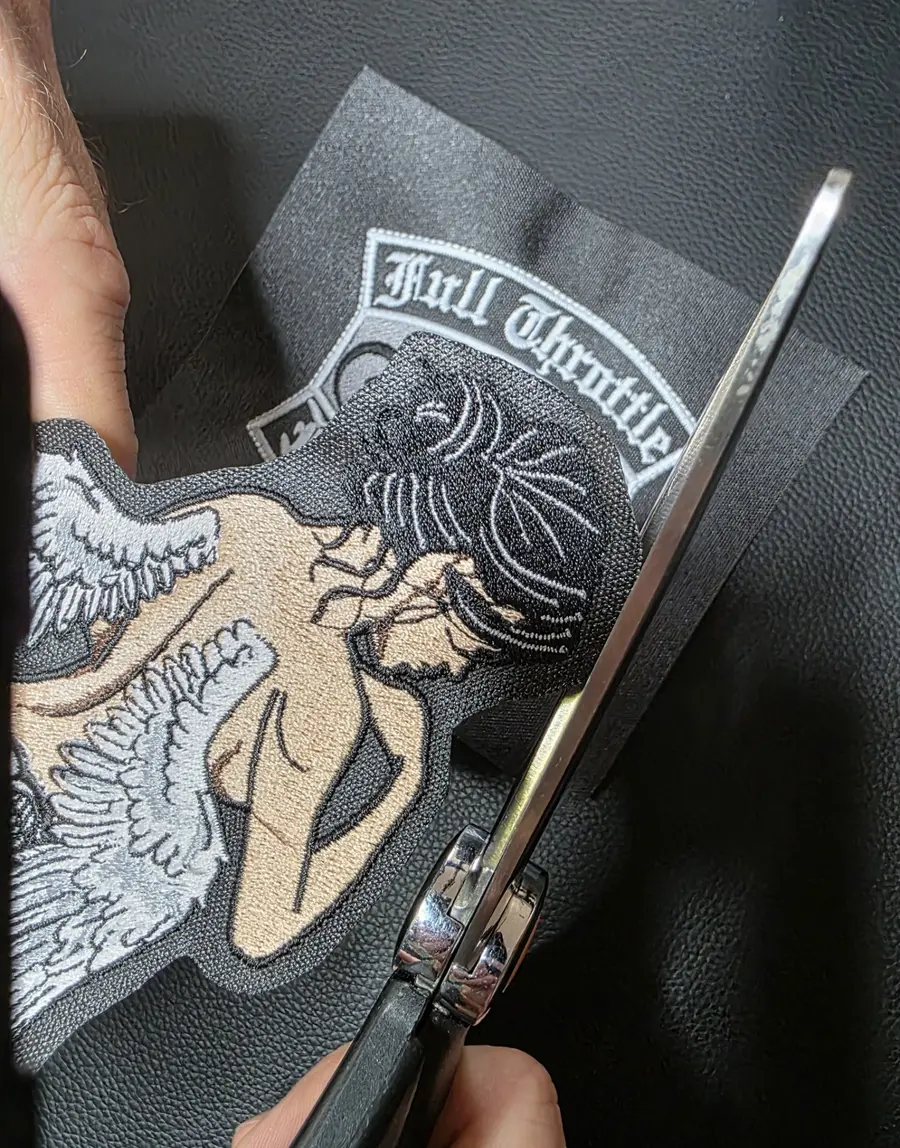
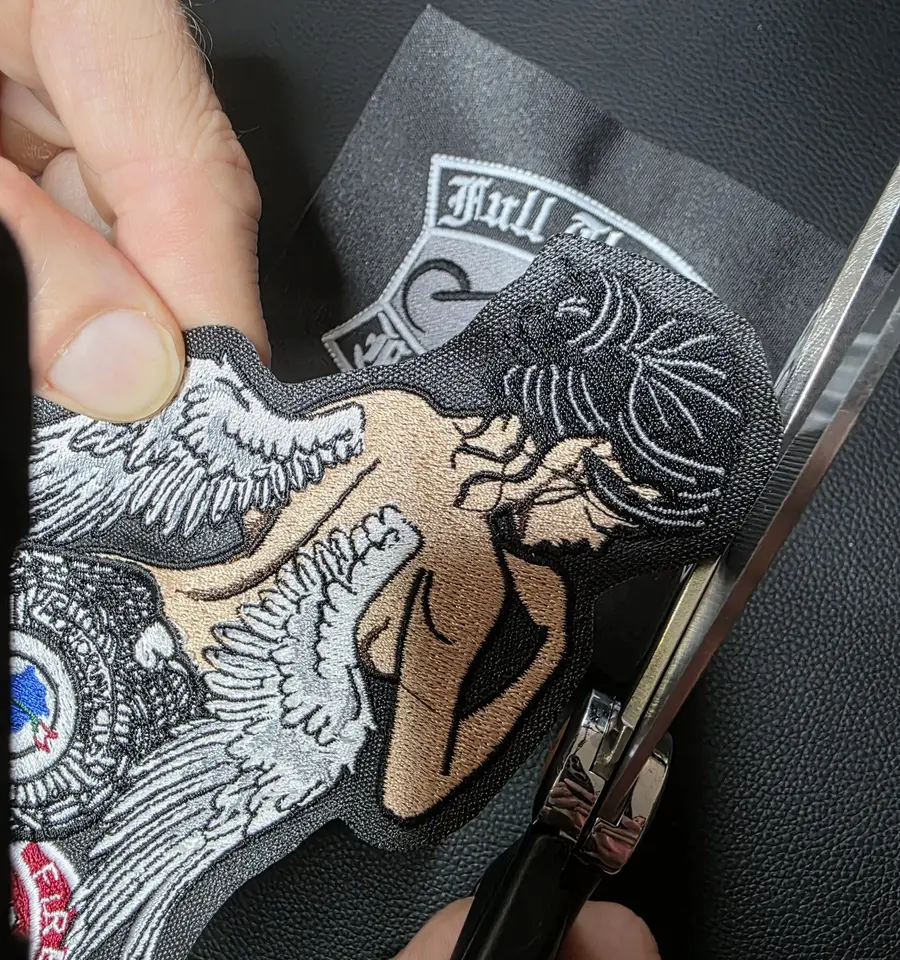
Not die cut in a stack. Not sent through a laser. A person picks up the piece, picks up the scissors, and cuts the border by eye, following the shape the design was built around.
It is slower. On a shape with tight interior curves it is much slower. It is also the only way to get a border that follows the artwork instead of approximating it, and it is why the outline of a patch made here matches the outline that was drawn.
Heat, twice
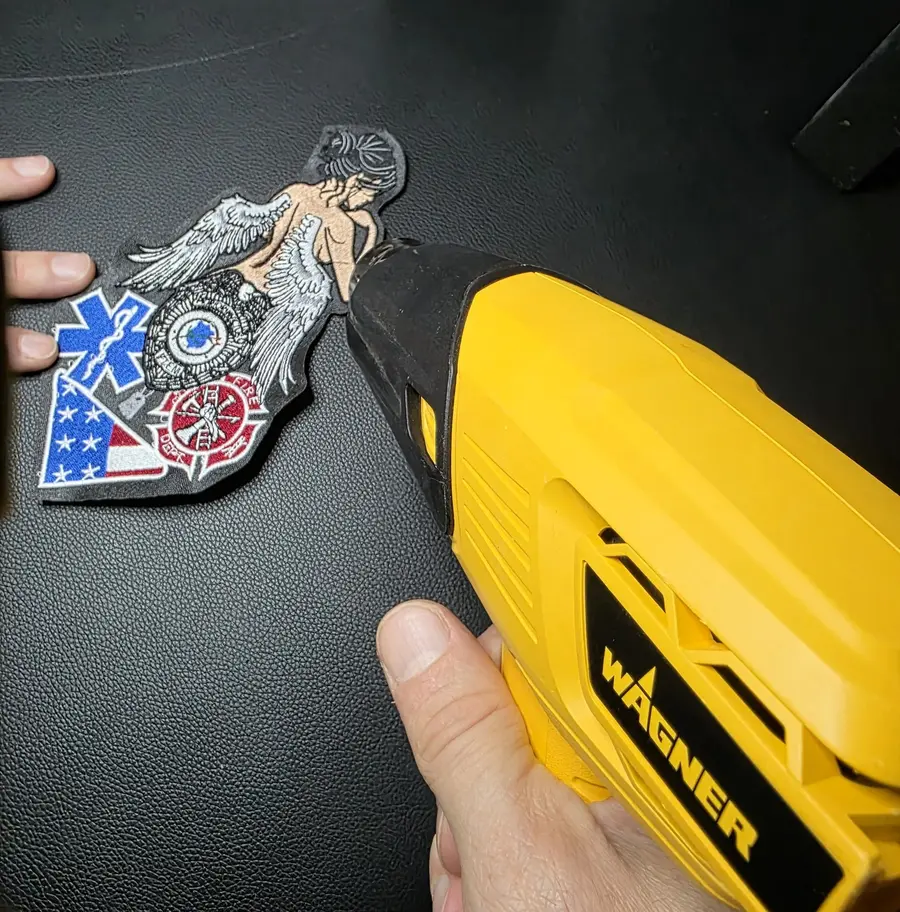
Cut polyester will fray. Two stages stop it.
First the piece is worked over with a heat gun, which sets the cut edge across the whole border at once.
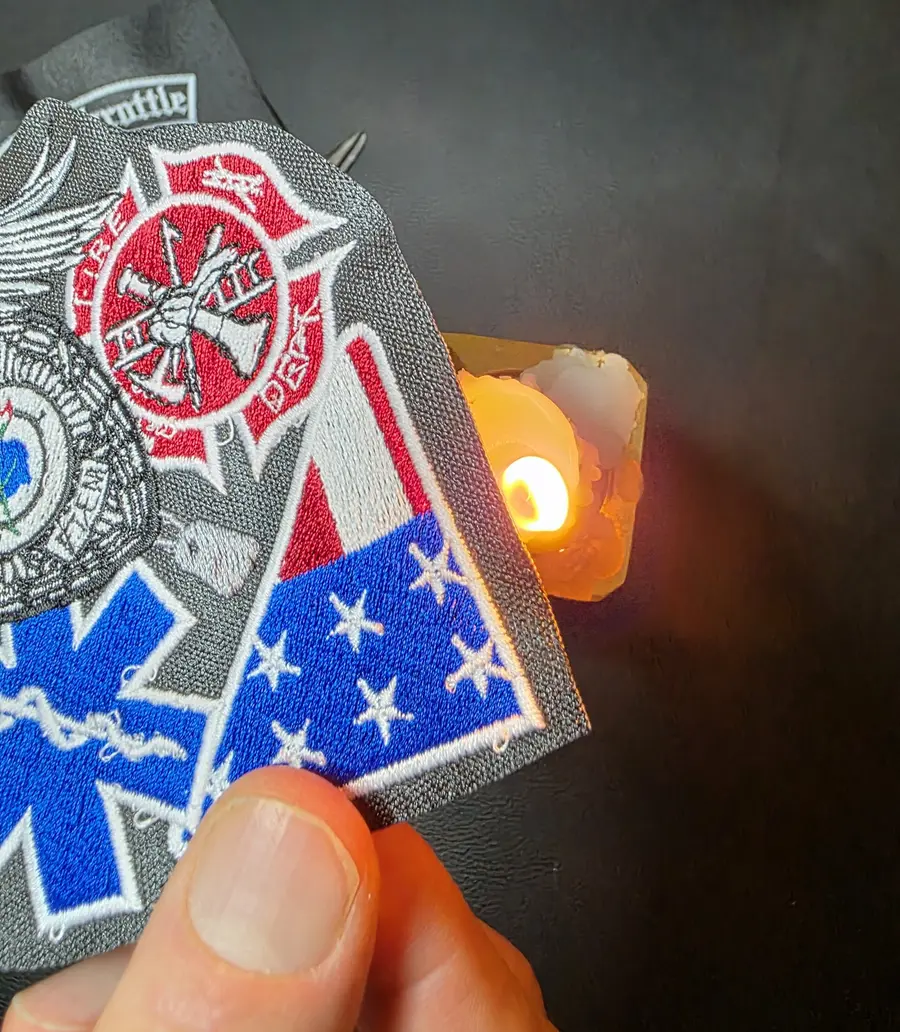
Then, as the last thing that happens to a patch before it is checked and packed, every edge is drawn through an open flame by hand. Edge by edge, turning the piece as it goes. It seals the very outermost fibers in a way that heat alone does not.
That is the final operation on every patch that leaves this shop. A person, holding it, over a flame.
Inspected, then archived
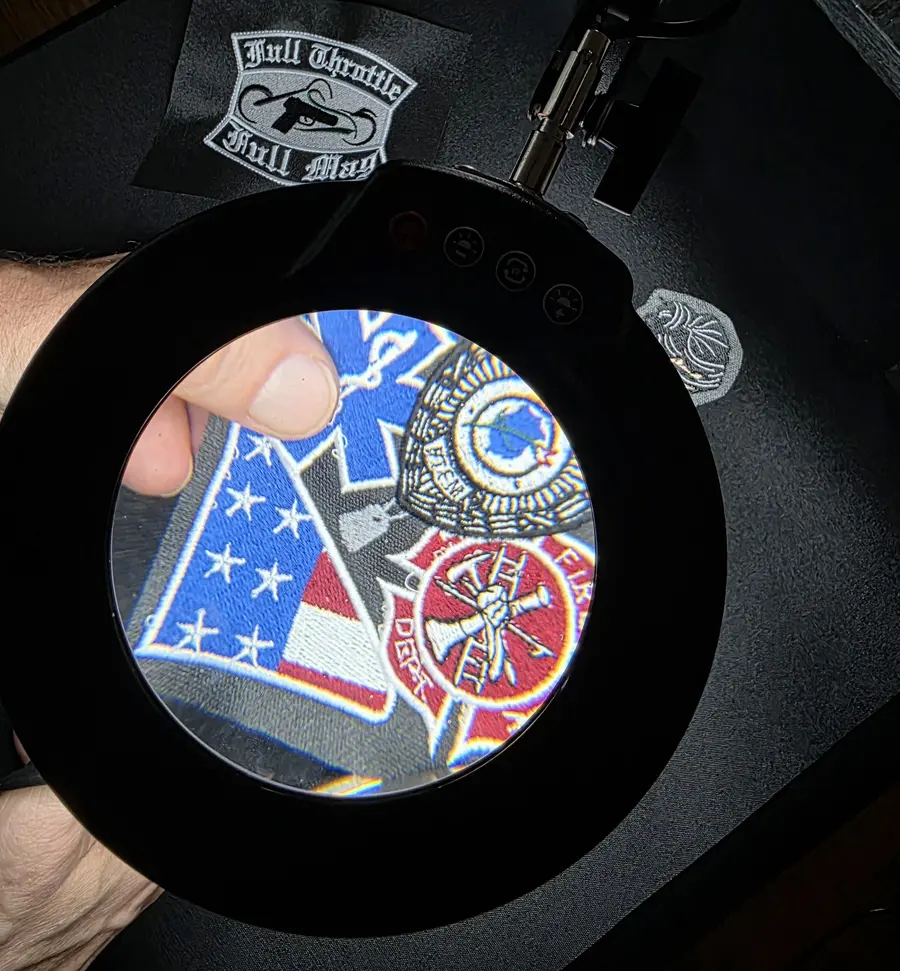
Every finished piece is checked under magnification before it ships. Loose ends, skipped stitches, a border that wandered, thread color that drifted between runs on a reorder. Things that are invisible at arm’s length and obvious on a vest in daylight.
Then the file is archived. Reorder in three years and it comes back identical, and you are not charged digitizing twice.
Your design is not reused. It does not become a template, it does not go in a catalog, and it does not turn up on somebody else’s back. A design made for your club is your club’s design. That is not a policy written for a website. It is the reason clubs send artwork here that they will not send anywhere else.
The Independence Standard