Club colors, made by someone who wears them.
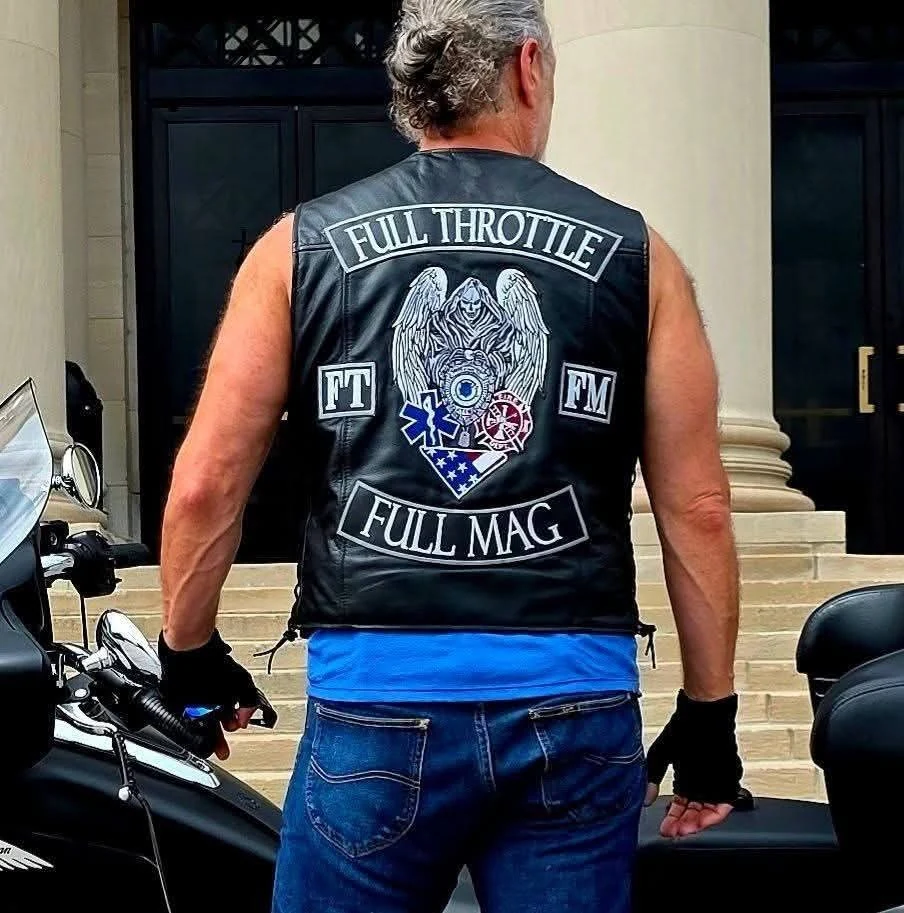
Independence Embroidery was built inside a law enforcement motorcycle club, because the shop making that club’s colors could not get them right or get them out on time. Everything here comes from that.
We make full sets. Center patch, top rocker, bottom rocker, cubes, name tabs, and one-off pieces that do not fit any category. Front patches and back patches. Whatever the set requires.
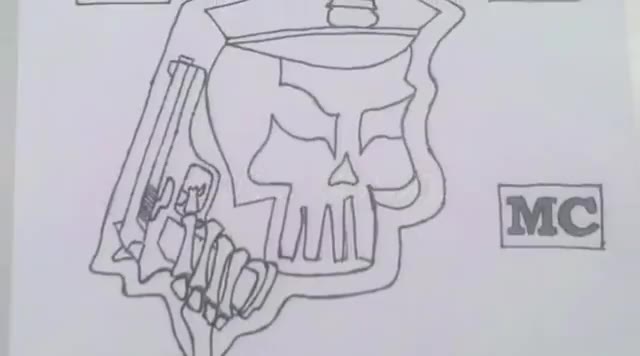
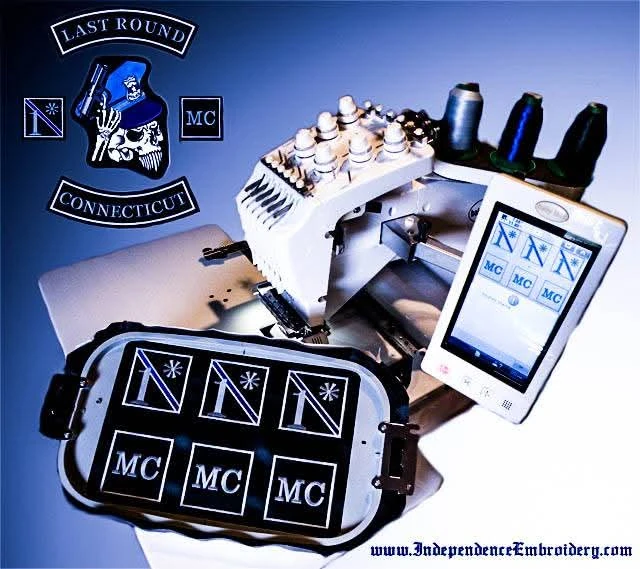
Every set on this page went through the same sequence. What changes is the club, the artwork, and what the colors are asked to carry.
What it costs
Most shops in this trade will not publish a price. We will.
| Piece | Price |
|---|---|
| Name tab, single line | $15 |
| Name tab, double line | $20 |
| Cube | $20 |
| Rocker, top or bottom | $35 |
| Center patch | $1.50 per 1,000 stitches |
| Custom front patch | $1.50 per 1,000 stitches |
Setup
| Center patch | $100 to $150 |
| Rocker, top or bottom | $35 |
| Cube | from $20 |
Setup is the plotting. Every file is hand-plotted by a person, not run through a converter, and that is what makes the stitching hold up. It scales with the design. A cube with a logo in it takes more plotting than a cube with lettering, and a center patch heavy enough to run past a hundred thousand stitches sits at the top of the range. Other small pieces run $30 to $45.
Setup is charged once, before the file is plotted, and it is separate from the cost of the patches. A design plotted today is still on file in ten years, and every reorder after that comes off the original file at patch price only.
A standard name tab is a single line of text in a standard font, in a horizontal frame no wider than four inches. Nothing about it needs digitizing, so nothing about it carries a setup fee. A second line makes the tab an inch and a half tall and moves it to $20.
Artwork, a logo, or a custom typeface has to be digitized before it can be stitched.
The flat prices cover the normal version of each piece. Above roughly 10,000 stitches on a name tab, 13,000 on a cube, or 24,000 on a rocker, the piece moves to $1.50 per 1,000 stitches. Nothing subjective decides that. The stitch count does.
No volume discounts. That is a deliberate position, not an oversight. Volume pricing is a screen printing habit, where the setup cost gets spread across the run and the hundredth shirt genuinely costs less than the first. Embroidery does not work that way. The twenty fourth patch takes the machine exactly as long as the first, gets cut by hand the same way, and gets inspected the same way. Charging less for it would mean one of those steps got skipped.
Your price does not change
Once we set a price on a set of colors, that is your price. Take on a member next year, or in five years, and you order one set at the same number. No setup again, no requote, no minimum.
Short of something extraordinary happening in the wider economy, we do everything we can to keep a club’s price exactly where it is.
Paying and shipping
Orders are invoiced by email. The invoice runs through PayPal, but you do not need a PayPal account. Pay with any card, or with Apple Pay or Google Pay. Card payments carry a three percent processing fee, added to the invoice. A check avoids that fee, though a check slows the order down. We do not take card numbers over the phone.
Shipping is Priority Mail with tracking. A set of colors or ten small front patches runs around $9.20. Larger orders cost more and we work it out case by case. When the invoice is paid the tracking number is emailed to you, and you can follow the package to your door.
International orders are quoted separately. Duties are calculated and applied either at the time of order or before the package ships.
How long
Two to three weeks, in hand.
This shop exists because a vendor turned two weeks into six and chapters could not establish themselves without their colors. That is not a story we tell on ourselves. If something is going to run late, you hear it from us before you have to ask.
What it is made from
Acrylic coated twill, coated on both faces, from a Missouri mill about twenty miles from the shop. The same class of coated polyester specified for marine canvas and awnings. Cotton twill fades, wicks water, and goes soft at the edges by the third season. Colors live on the back of a vest through road grime, exhaust heat, rain, and years of UV, and they get stitched onto material built for that.
Every file is plotted by hand. Not auto traced, not run through a converter. Someone sits with the artwork and decides where each stitch lands, which direction the fill runs, and how much compensation the design needs so it comes off the machine looking like it looked on paper. That is the difference between a patch that lies flat and a patch that puckers.
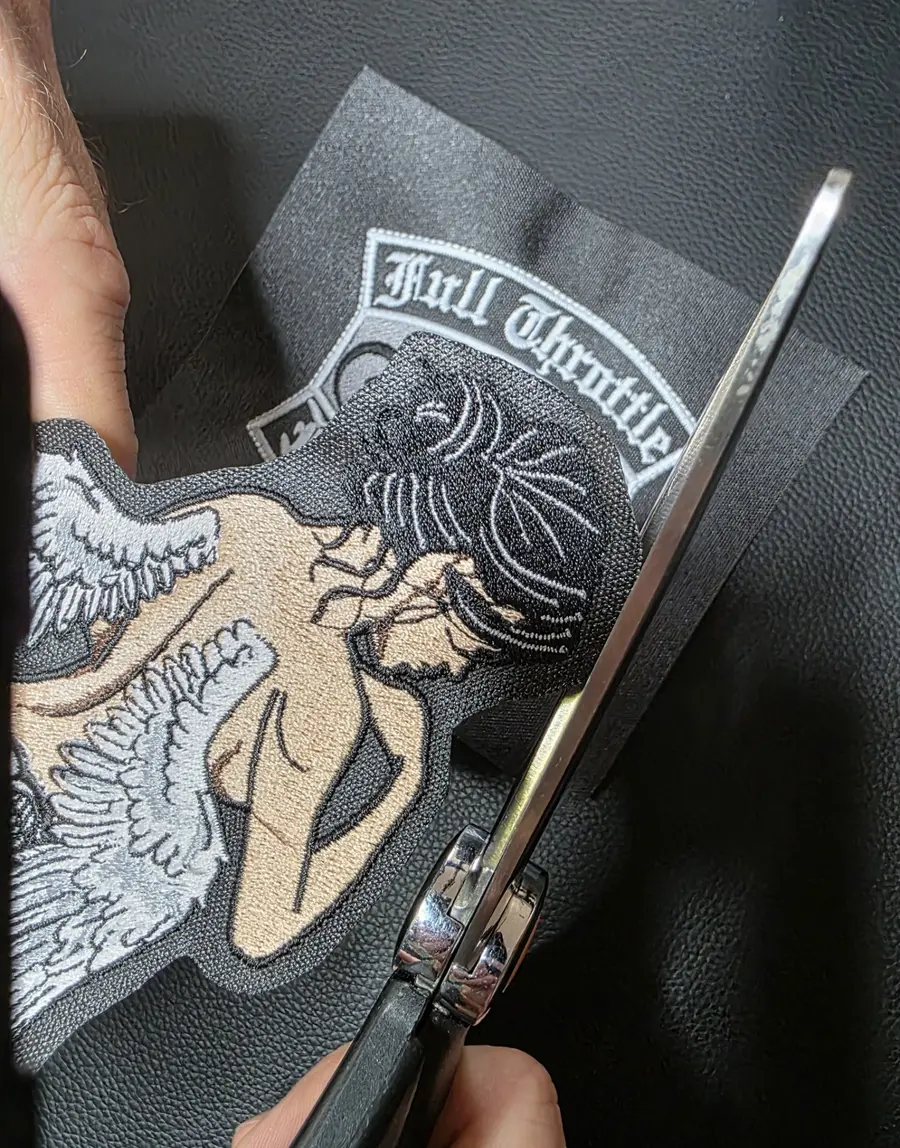
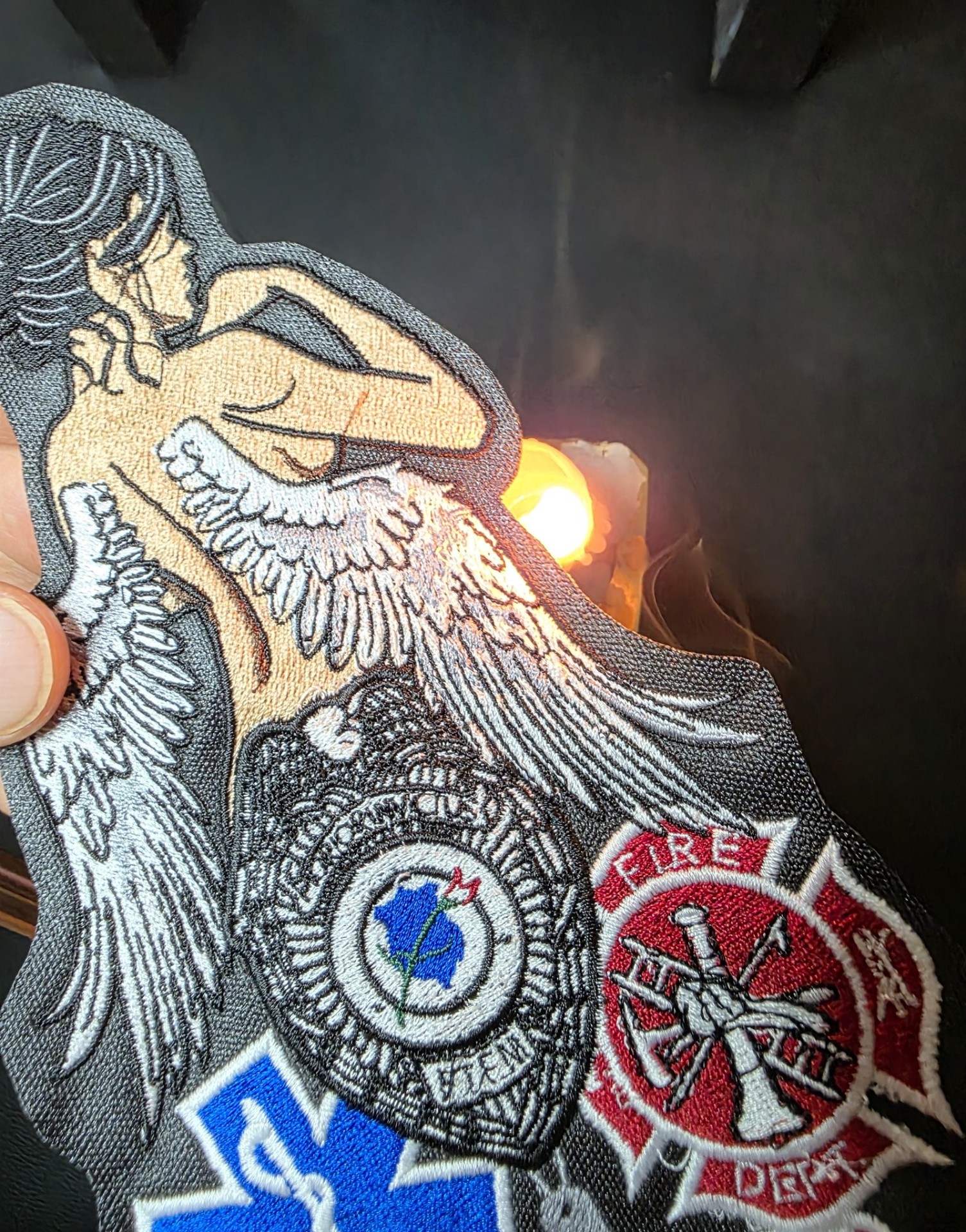
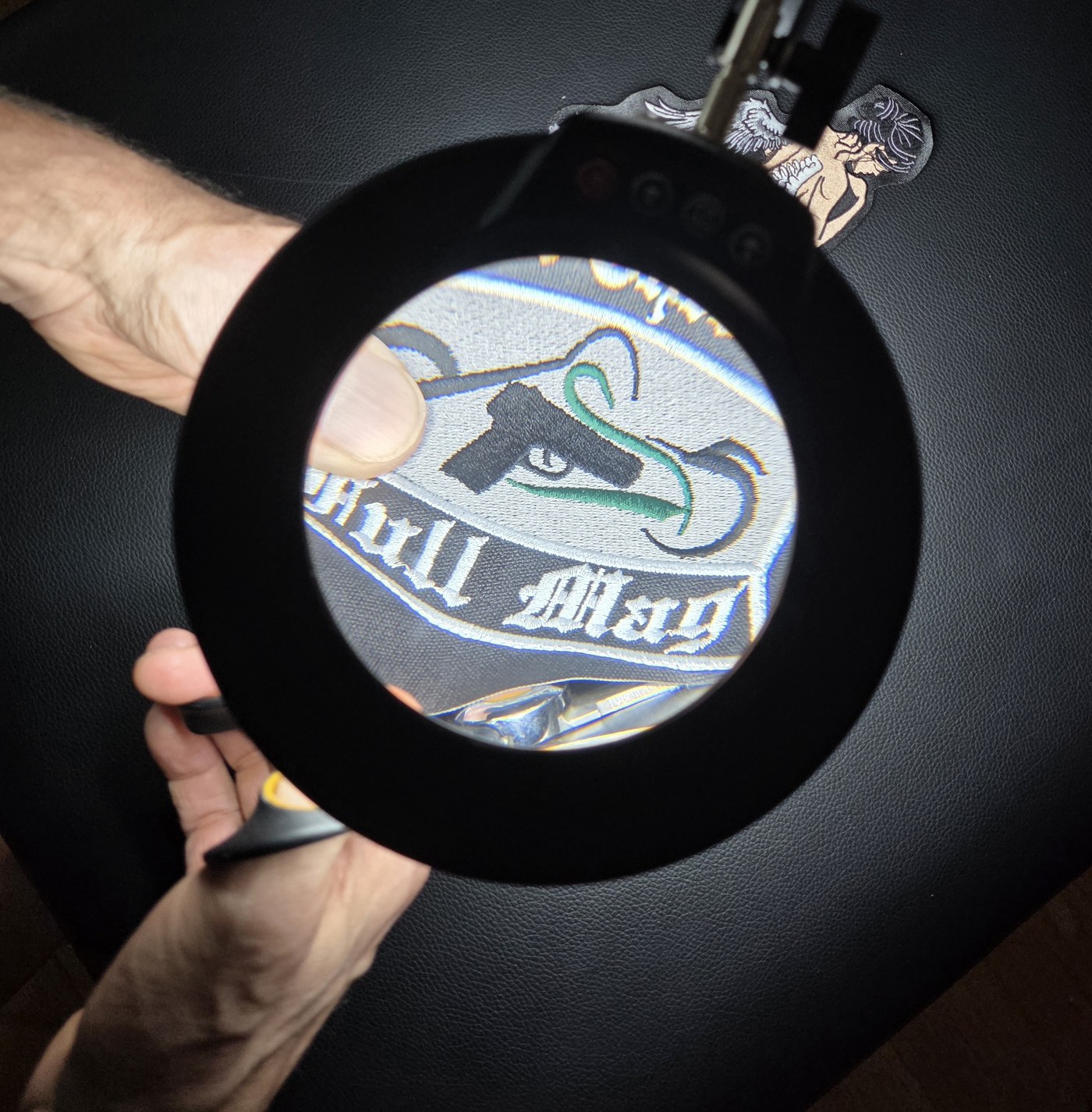
Every edge is cut by hand and heat sealed. Not die cut in a stack. Then inspected under magnification before it ships.
Your artwork stays yours
Every design is archived and never reused. A set made for your club is your club’s design. It does not become a template, it does not appear in a catalog, and it does not turn up on somebody else’s back.
That is not a policy written for a website. It is the reason clubs send artwork here that they would not send anywhere else.
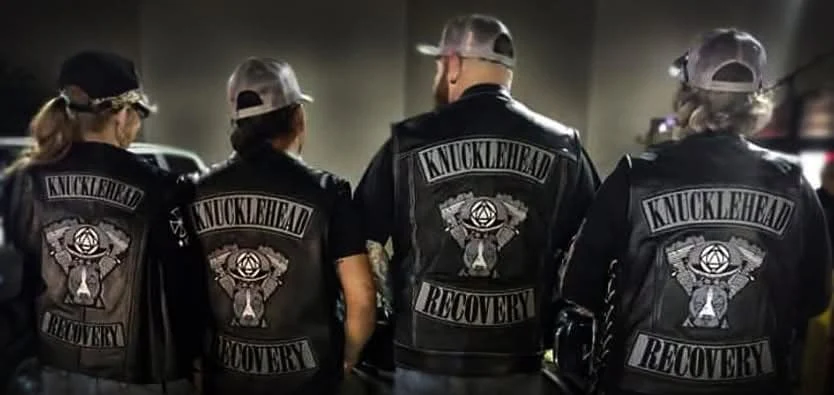
Who we make colors for
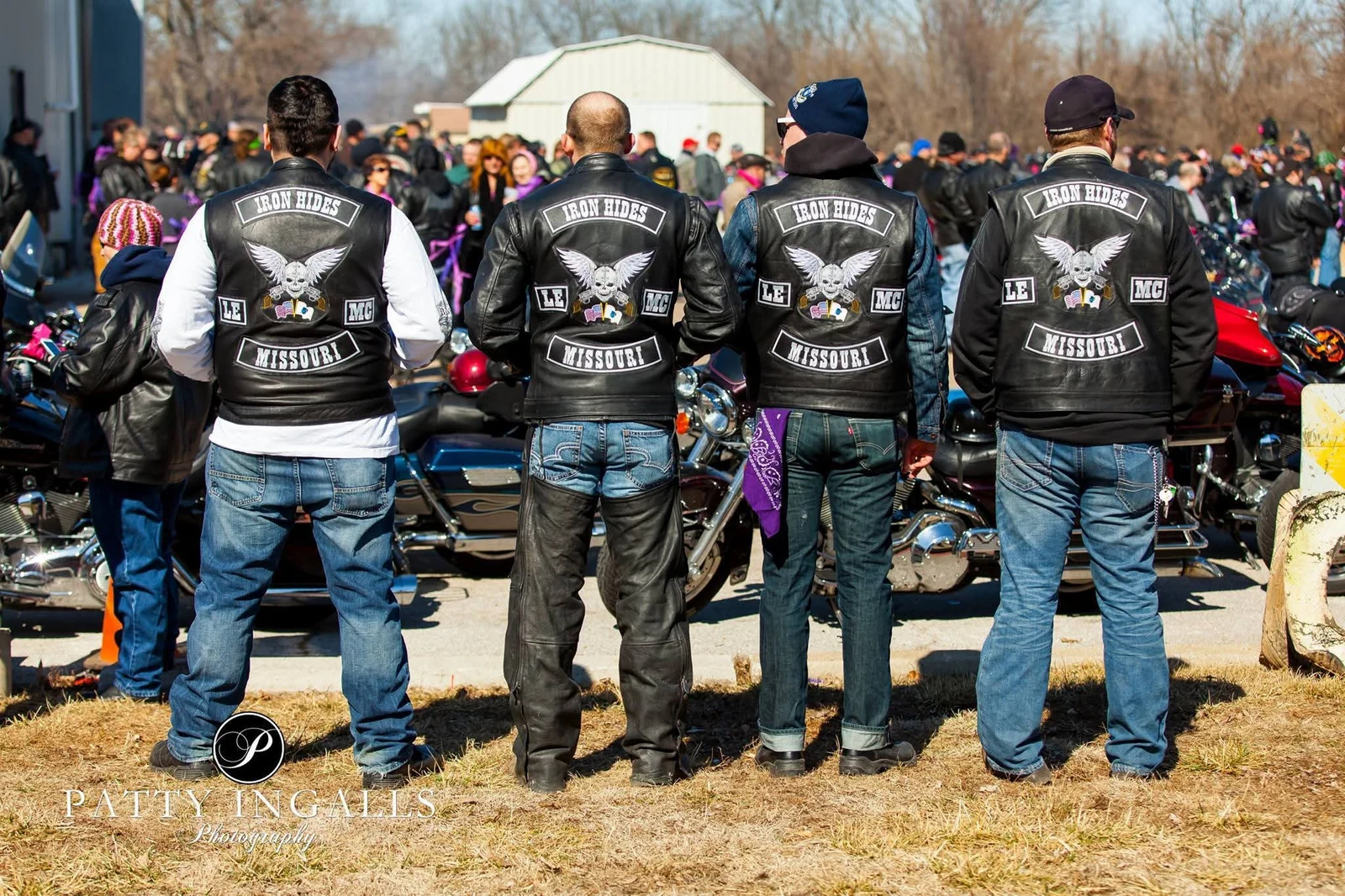
Law abiding motorcycle clubs, riding associations, and law enforcement clubs. Founded inside one, still in one.
To start
Send a photograph of what you want and the approximate height and width. That is the whole intake. No forms to work through, no account to create.
The Independence Standard
What the Colors Say
Two different things happen on a vest, front and back, and they are easily confused.
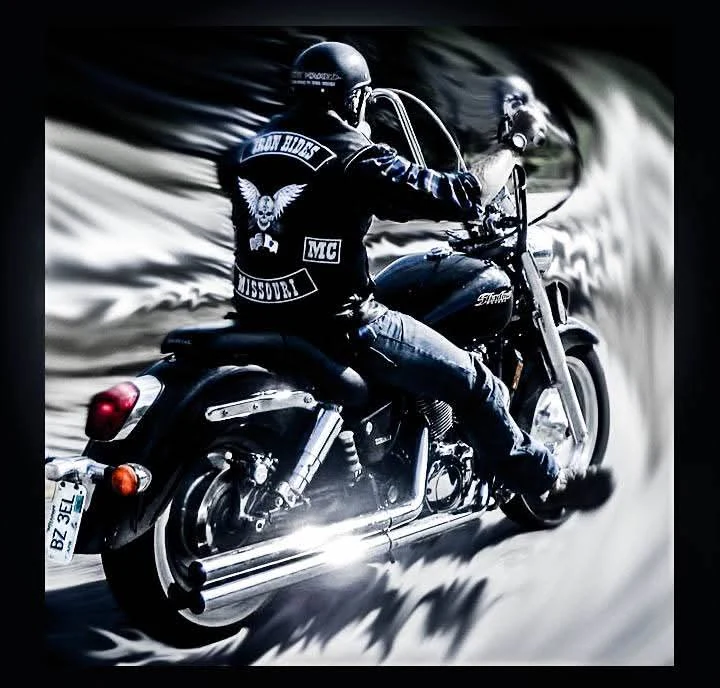
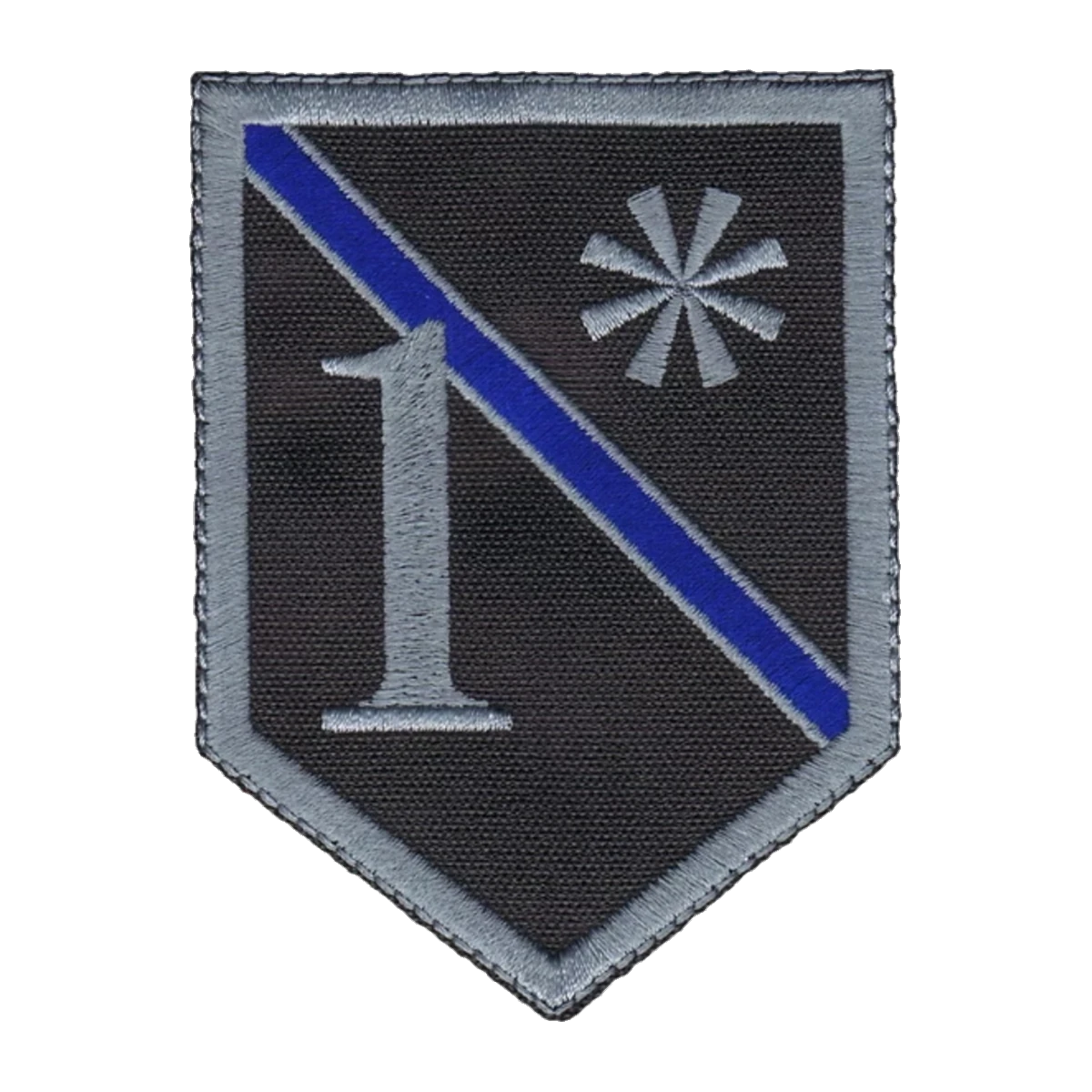
The back carries the club. Its name, its identity, its design, worn the same by every member. When a back patch speaks to public service, it speaks through the design itself. A Maltese cross in red. A Star of Life in blue. A badge with a blue line through it. That is the club saying who it is.
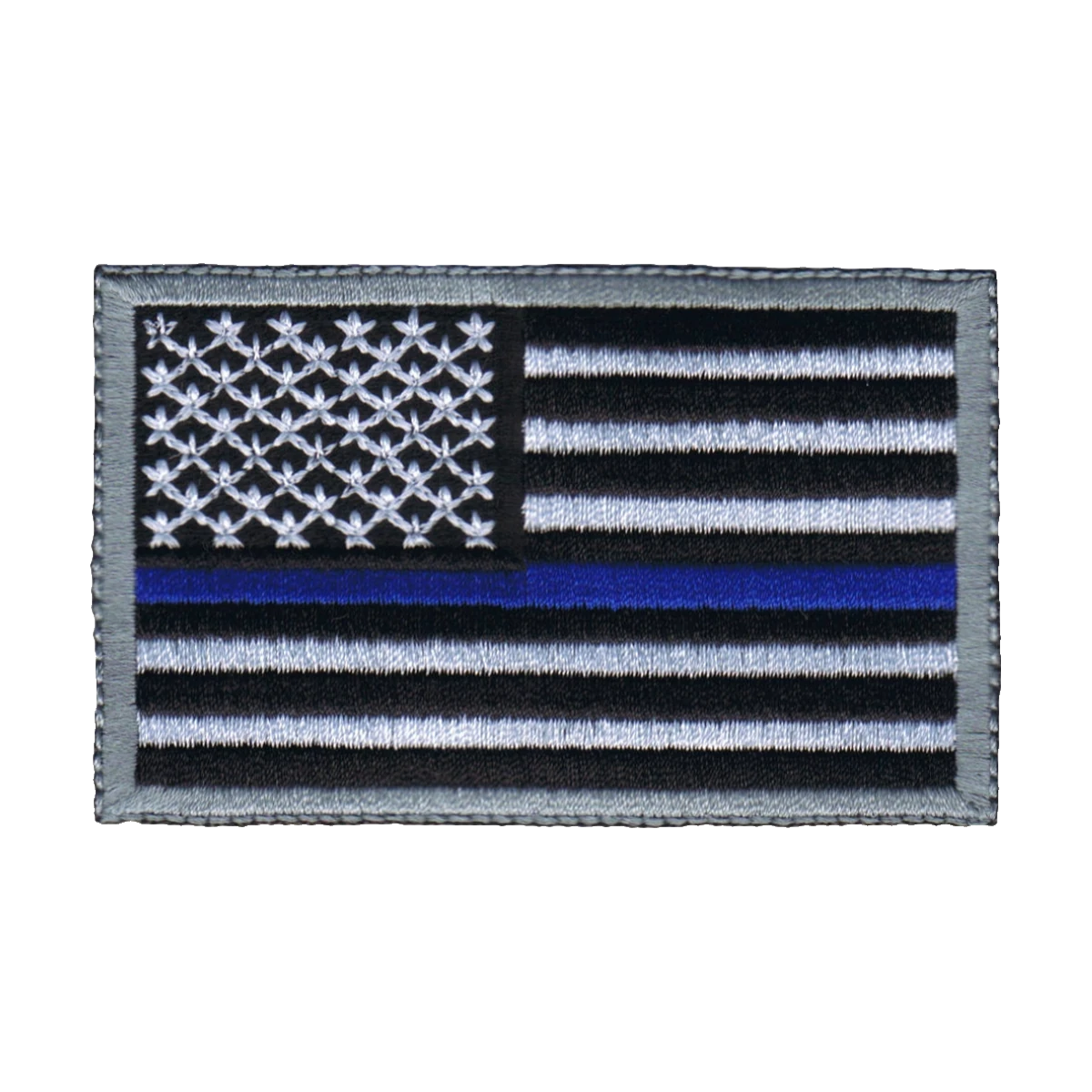
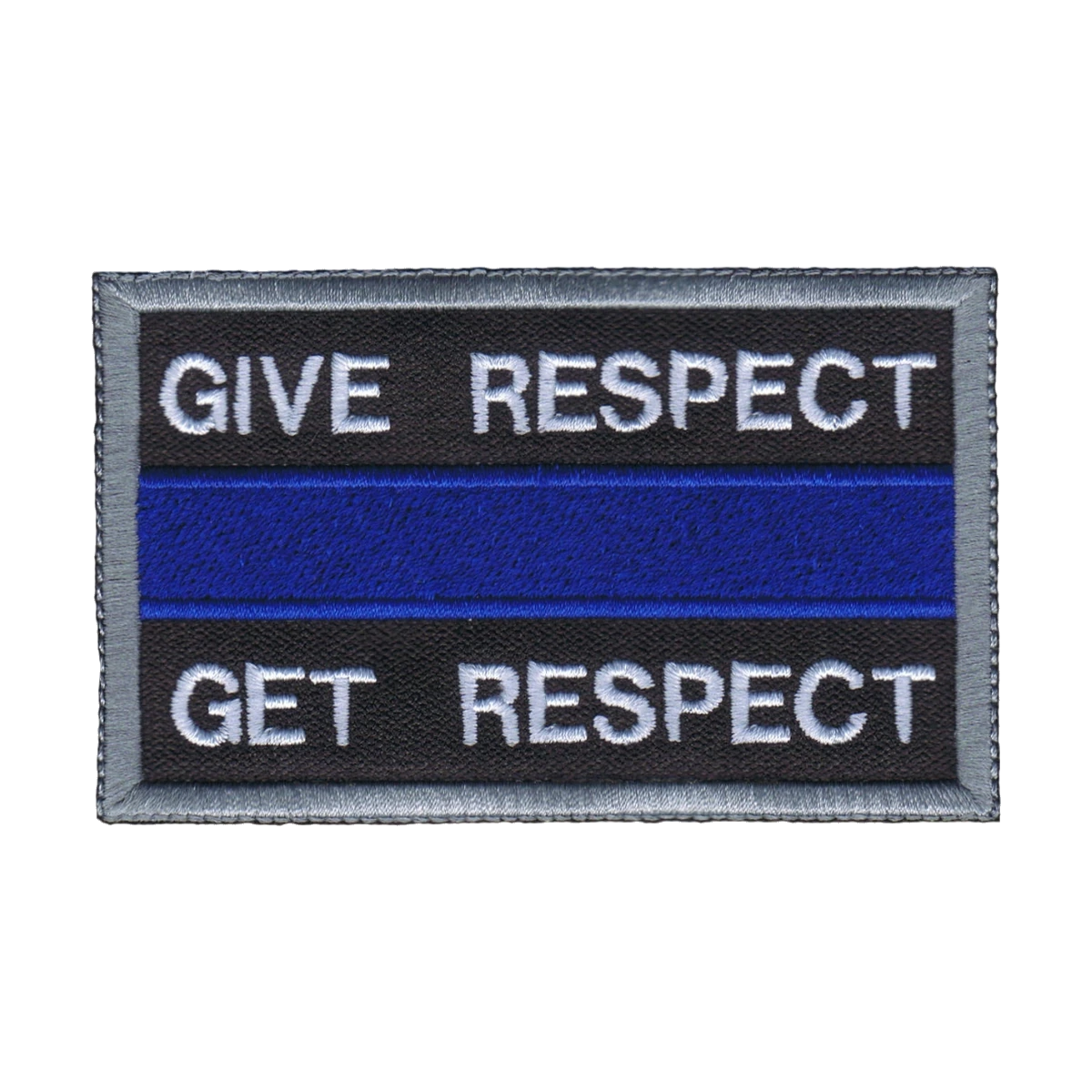
The front is where the member shows. Name tags, flags, front support patches, and small indicators of an individual's line of service. That is where a color code lives.
How a color code works
One element in a fixed color runs through an otherwise identical set of front patches. A line through the design, or an indicator inside it. The patch does not change from member to member. The color does.
Full Throttle Full Mag, the riding association founded by our owner, John Larson, uses six.
Everyone knows who is who in the club, from across a parking lot, without a word spoken.
Whose choice it is
Some clubs leave the front of the vest to the member. Others want it uniform, and order their flags, name tags, and front support patches as a set so every vest matches.
Both work. The second only works if the colors come back the same every single time.
Which is why we do not move a millimeter
A color that drifts between orders gets noticed. So does a border that comes back a hair wider. Members stand next to each other. They compare. The entire point of a code is that it repeats.
So we do not improve a design between runs. A member who joins next spring gets a patch that sits beside a founding member's without looking newer.
We keep every file. The stitch file, the original artwork, the whole folder, for every club we have ever worked with, however briefly. A reorder in year ten runs from the same file as the first one did.
Yours would be different
This is one organization's code, not an industry standard. Blue does not mean law enforcement to every club in the country, and it should not. The point is not to copy these six colors. The point is that a code can be built at all.
Bring us what your club needs to say on the front of a vest. We will work out how to say it in thread, and we will say it the same way every time after that.
Front support patch
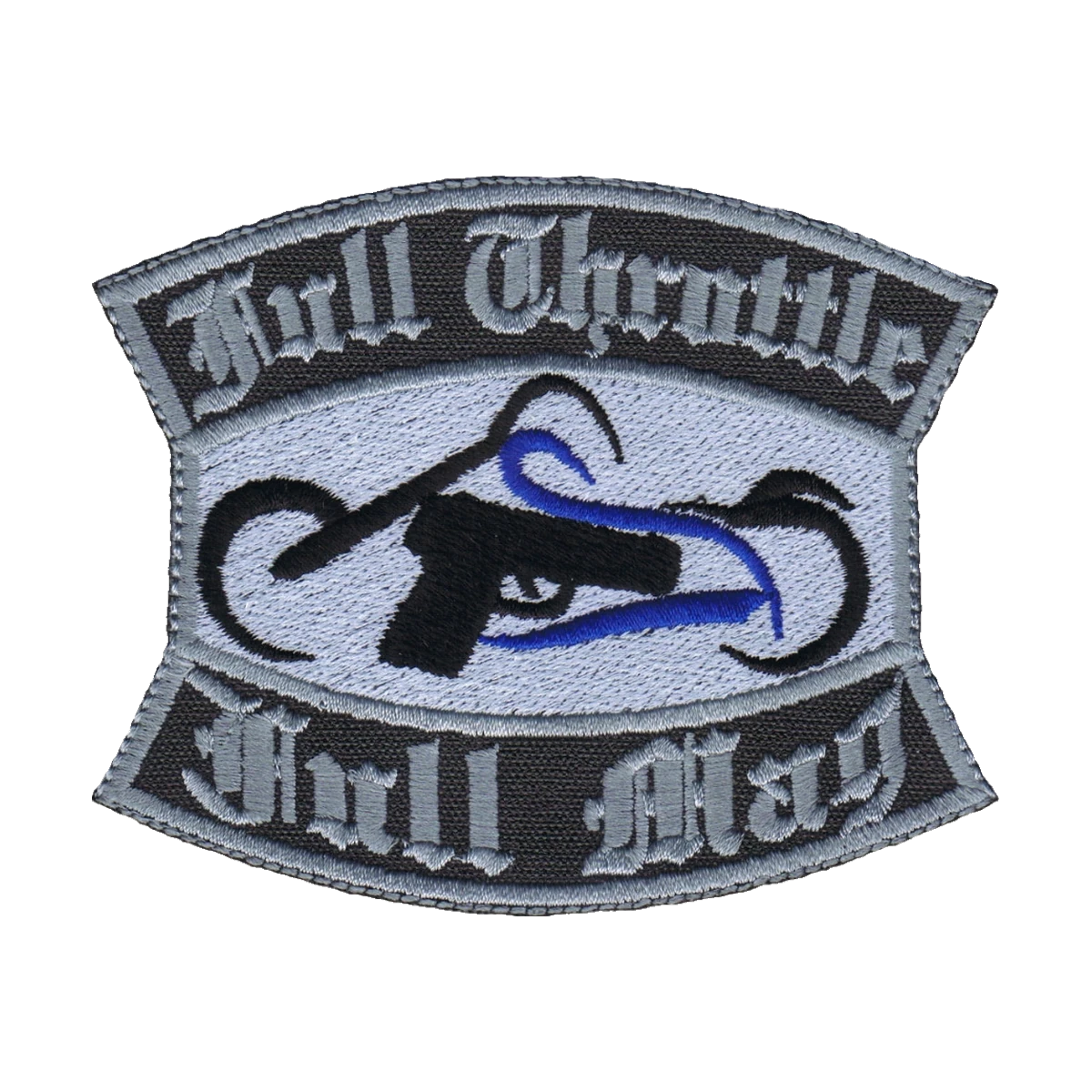 Blue
Blue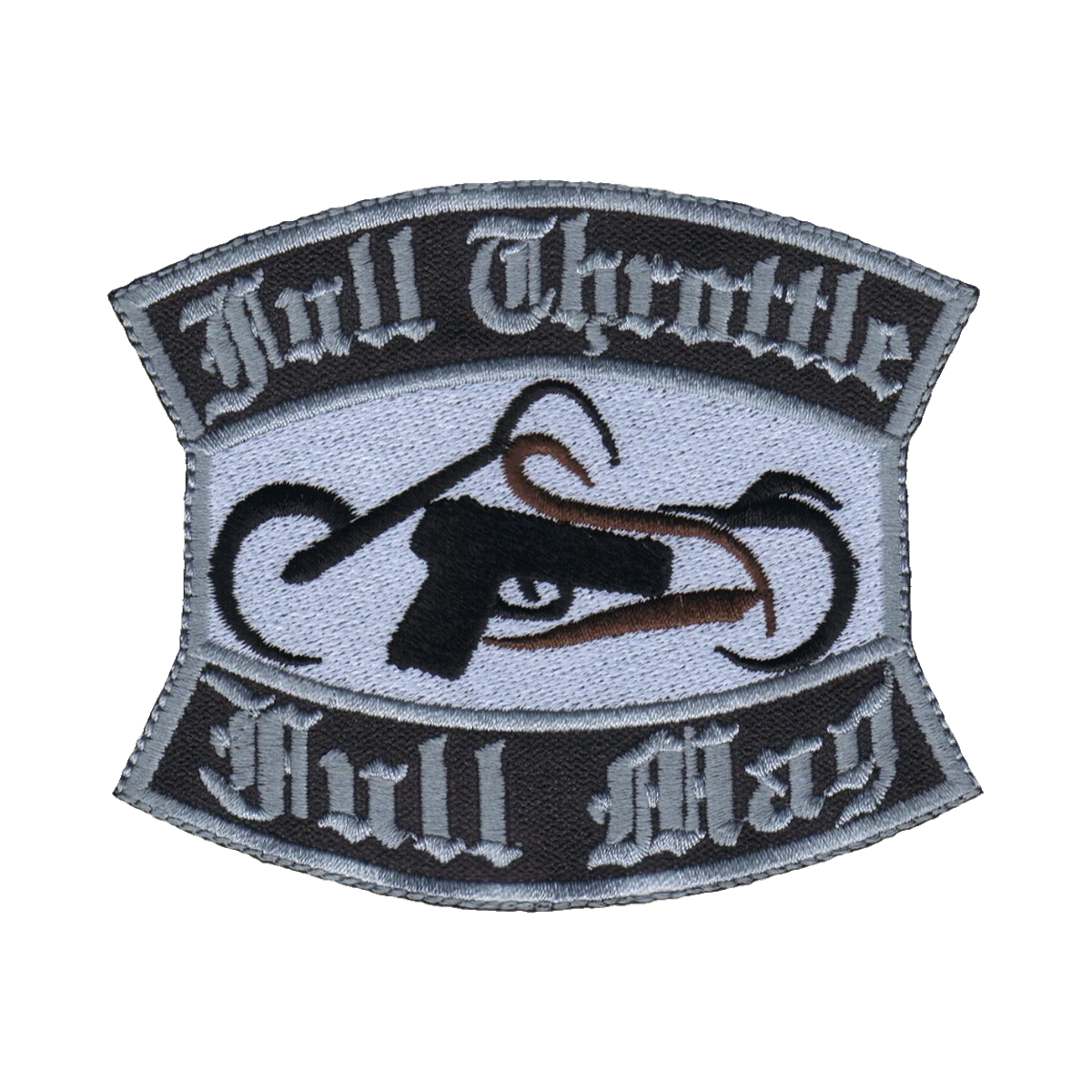 Brown
Brown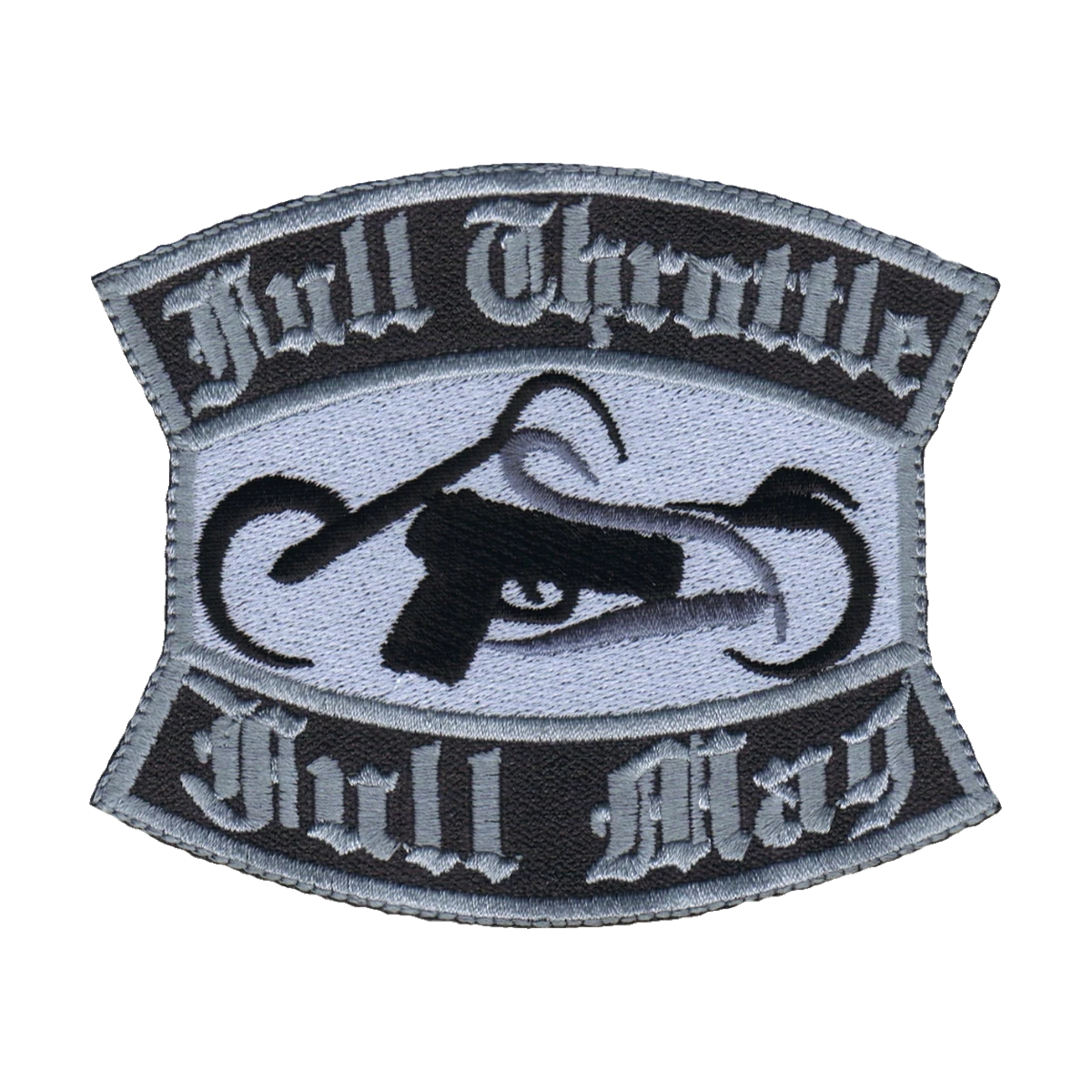 Gray
Gray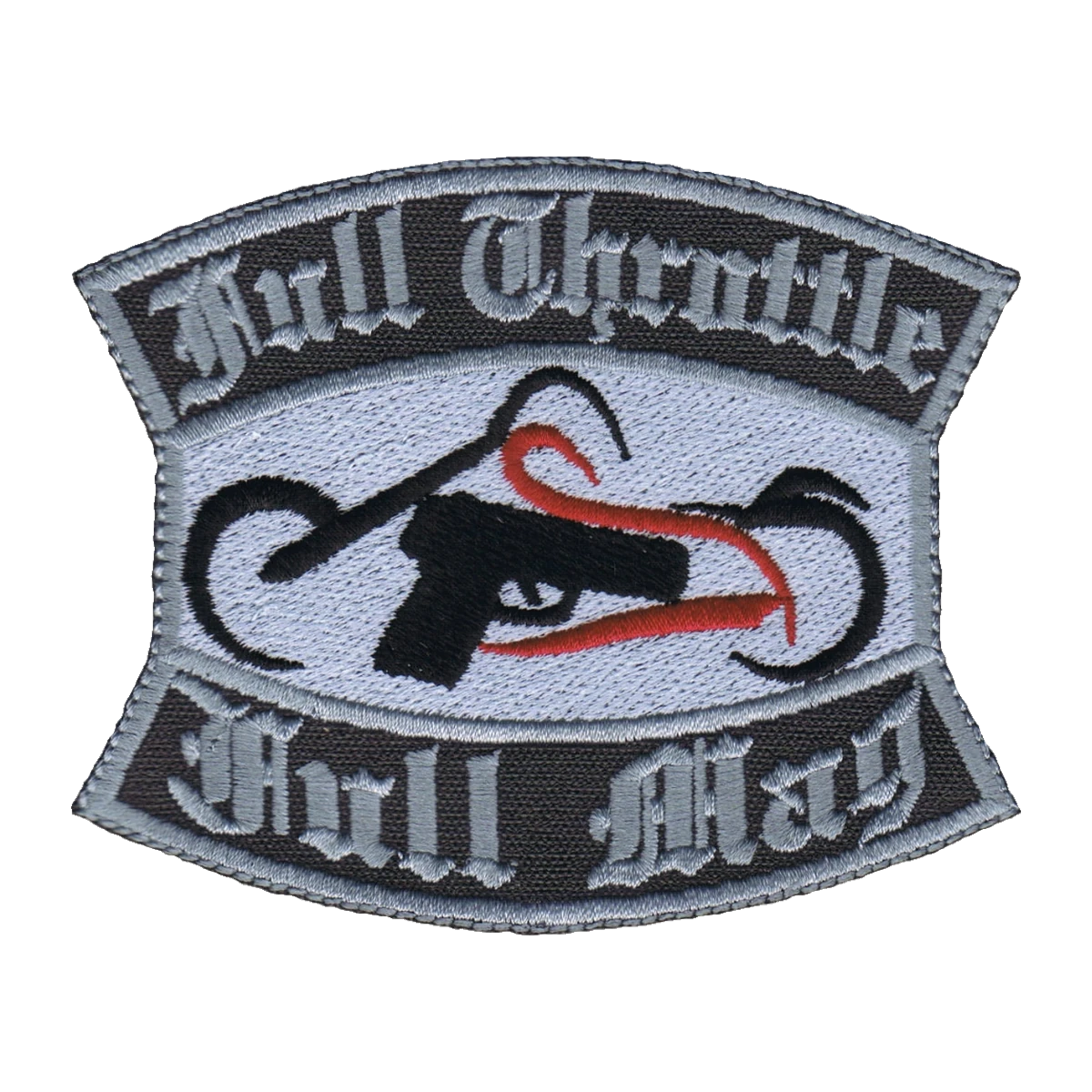 Red
Red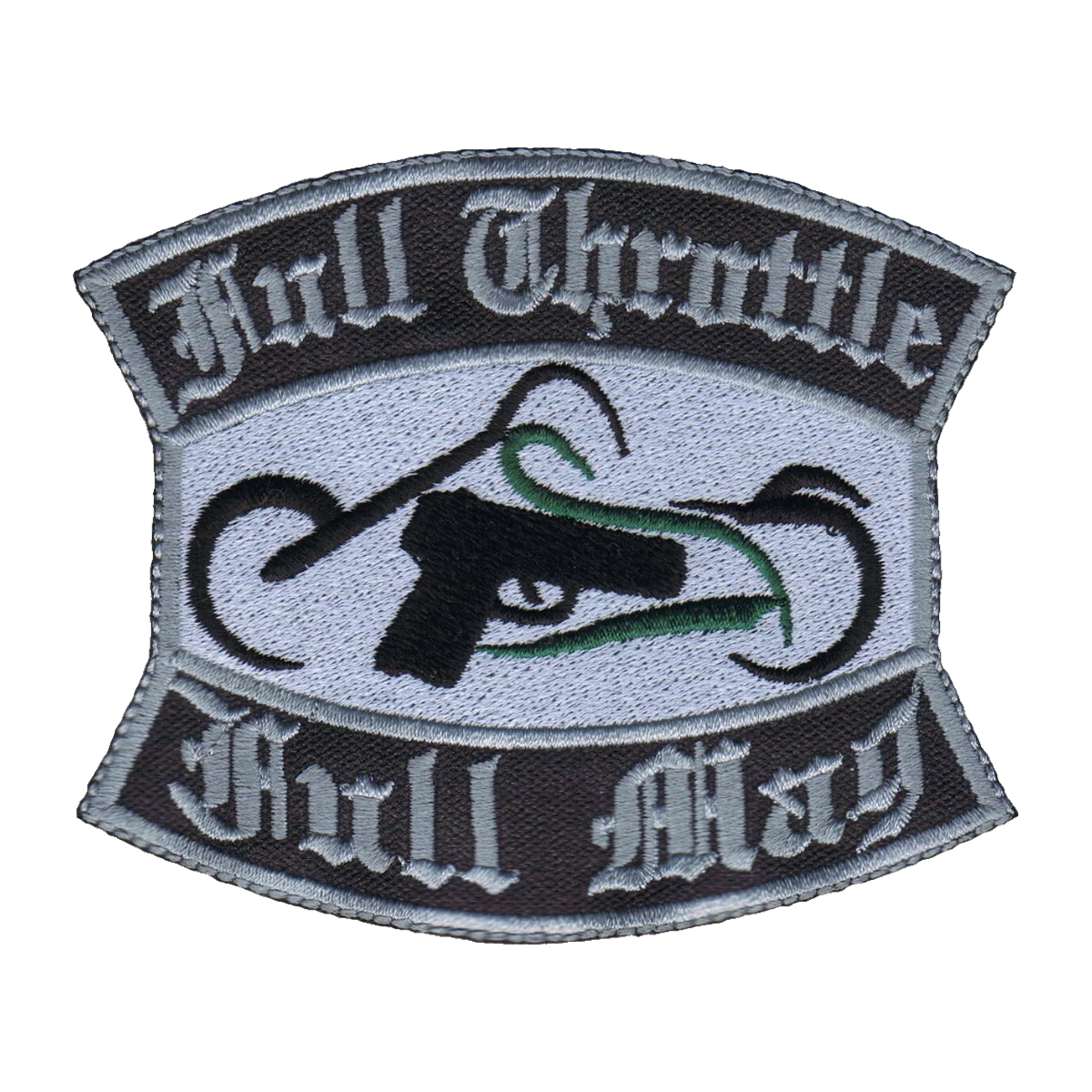 Green
Green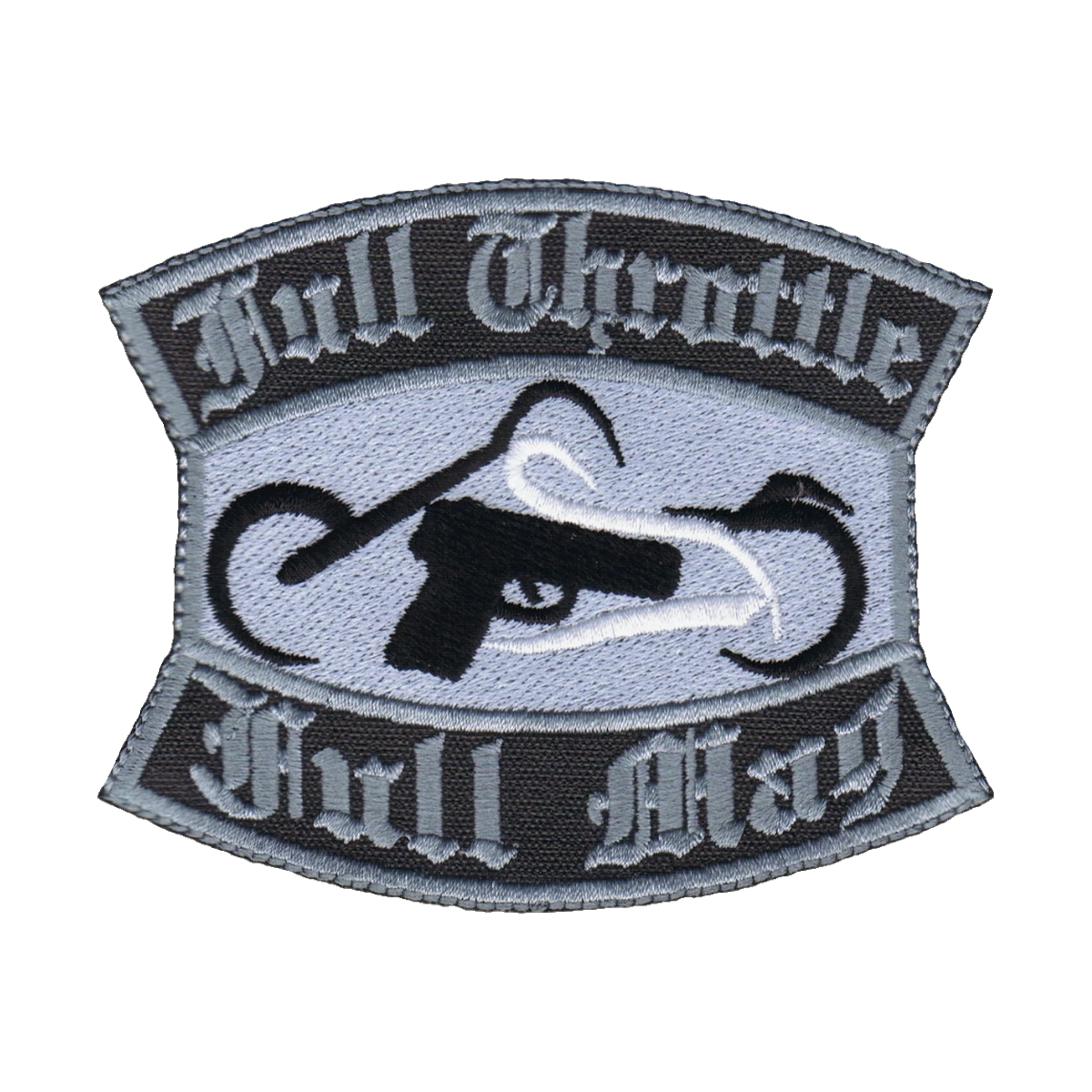 White
White
Shield
 Blue
Blue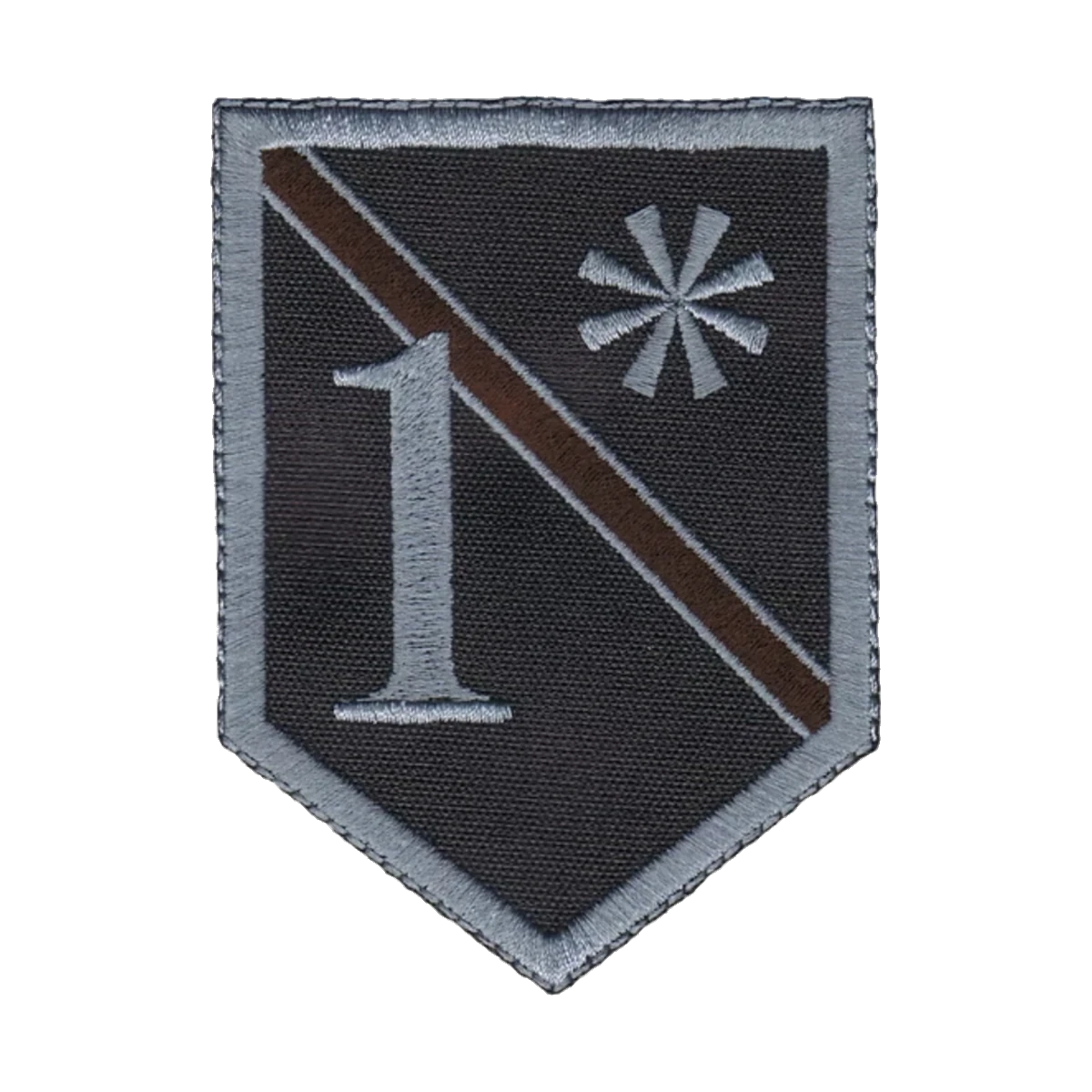 Brown
Brown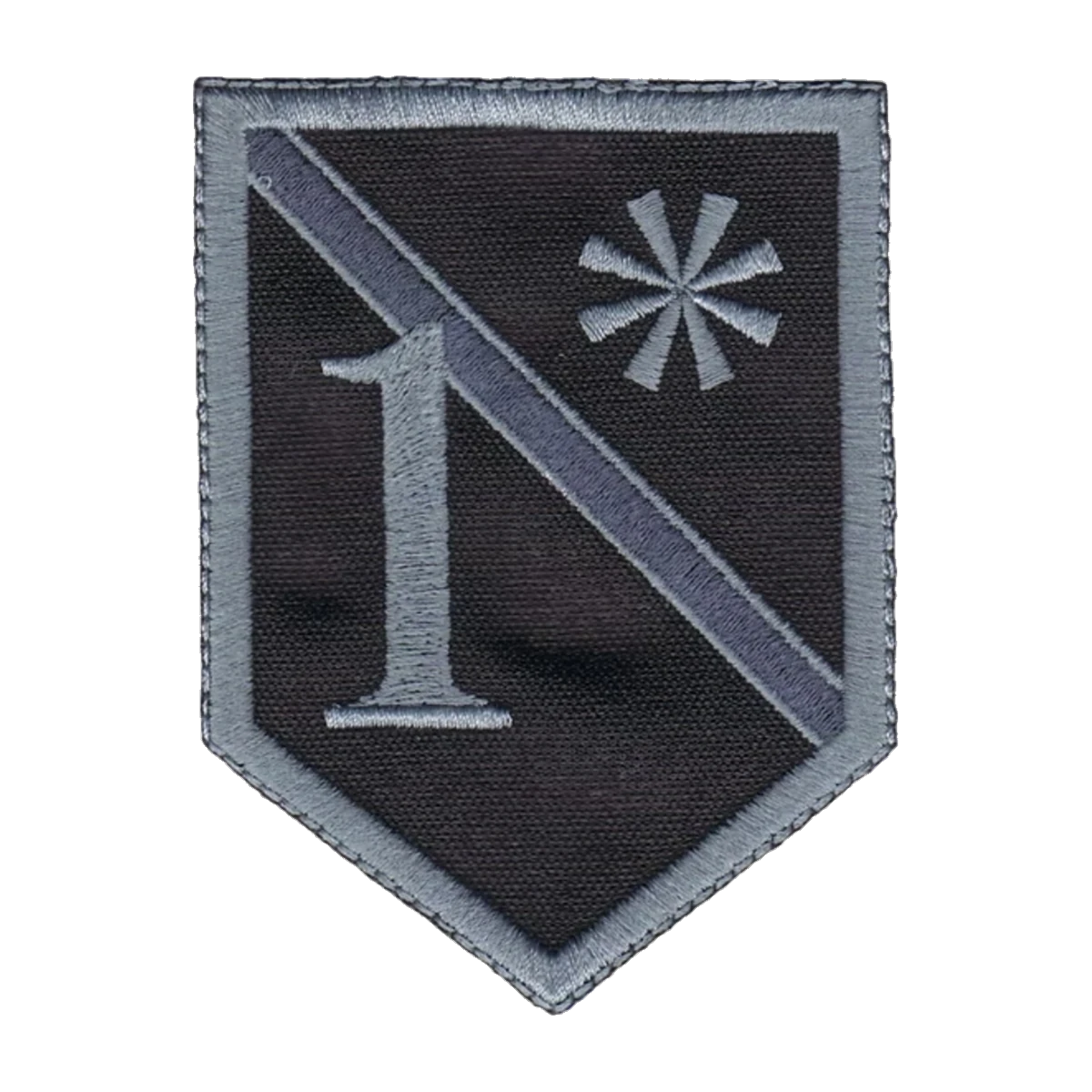 Gray
Gray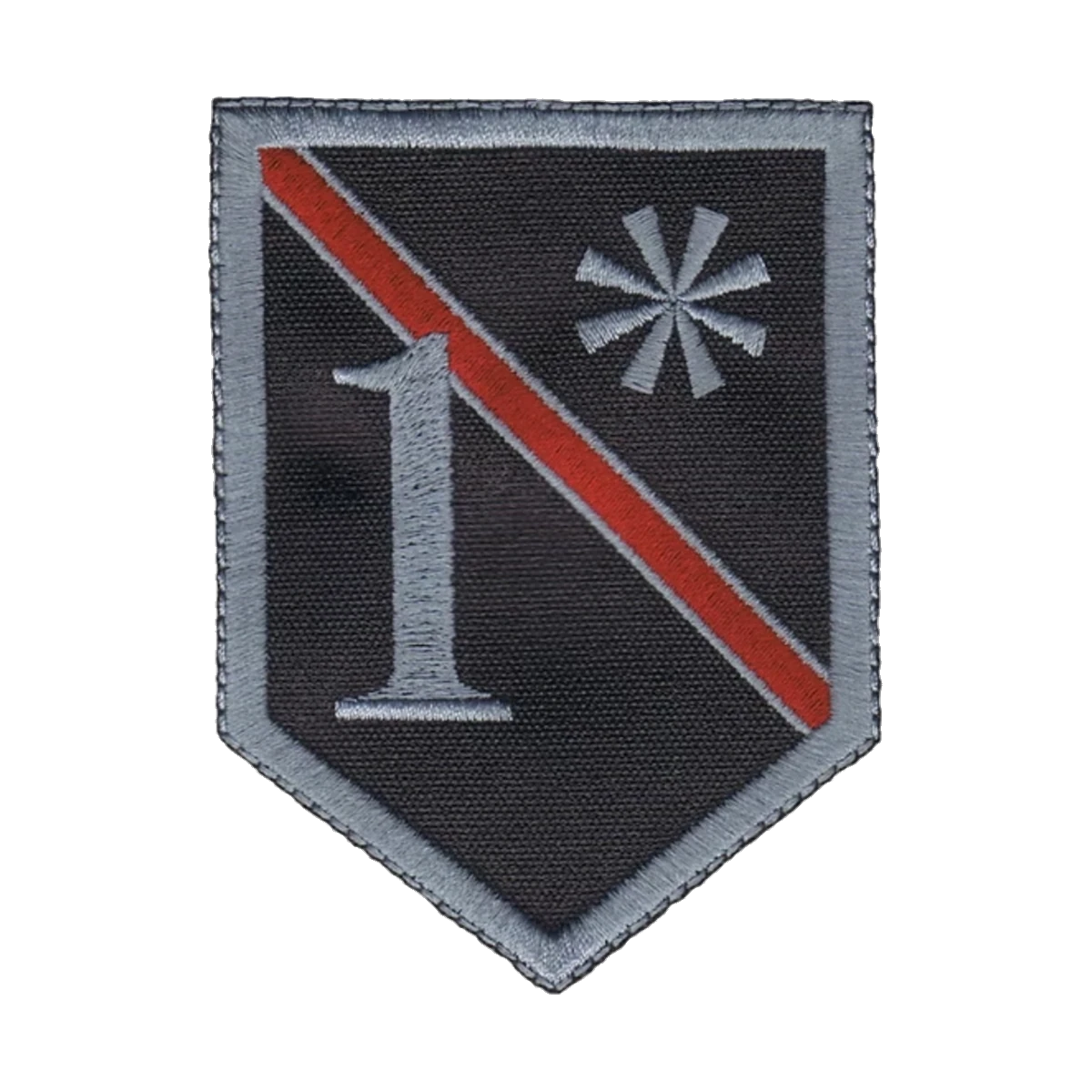 Red
Red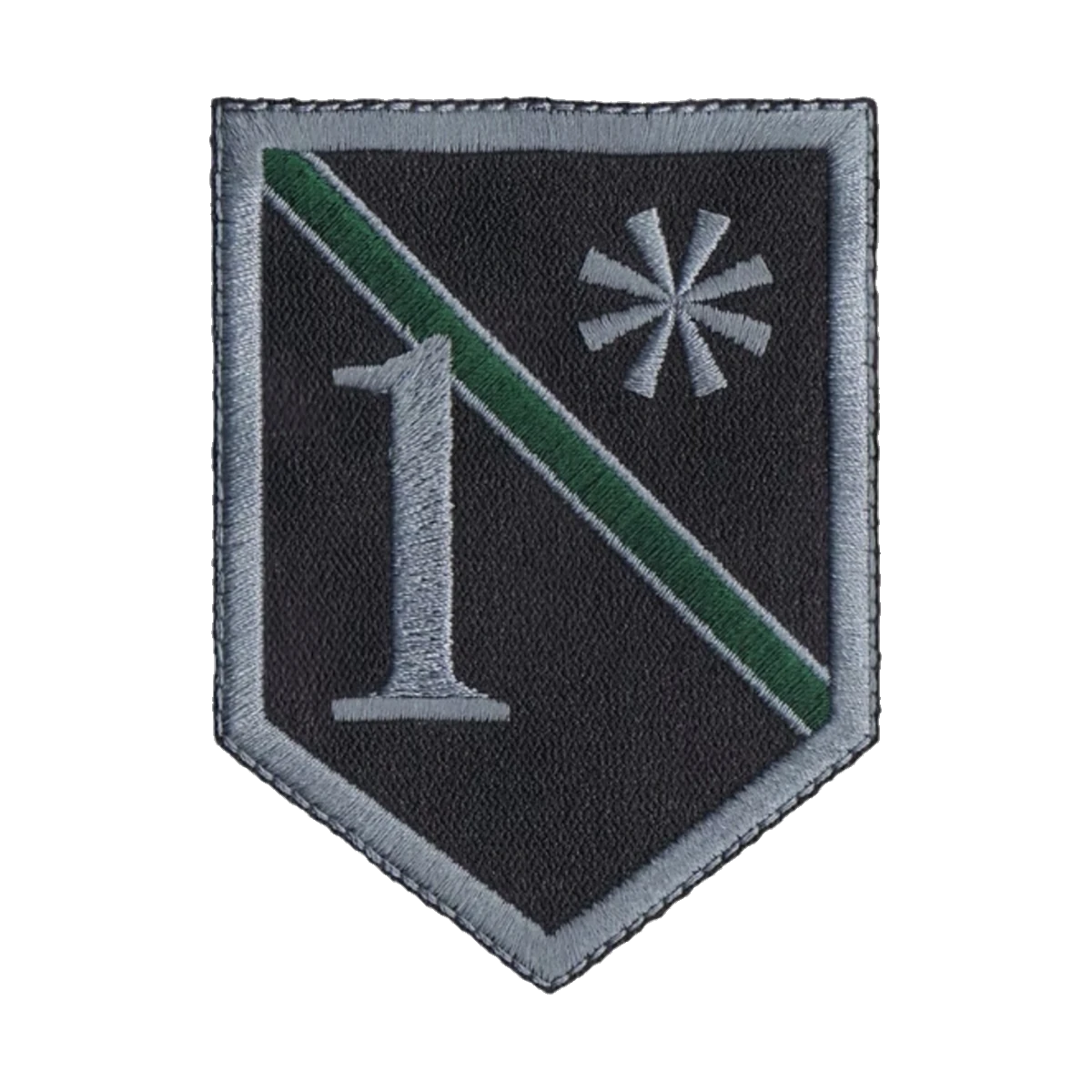 Green
Green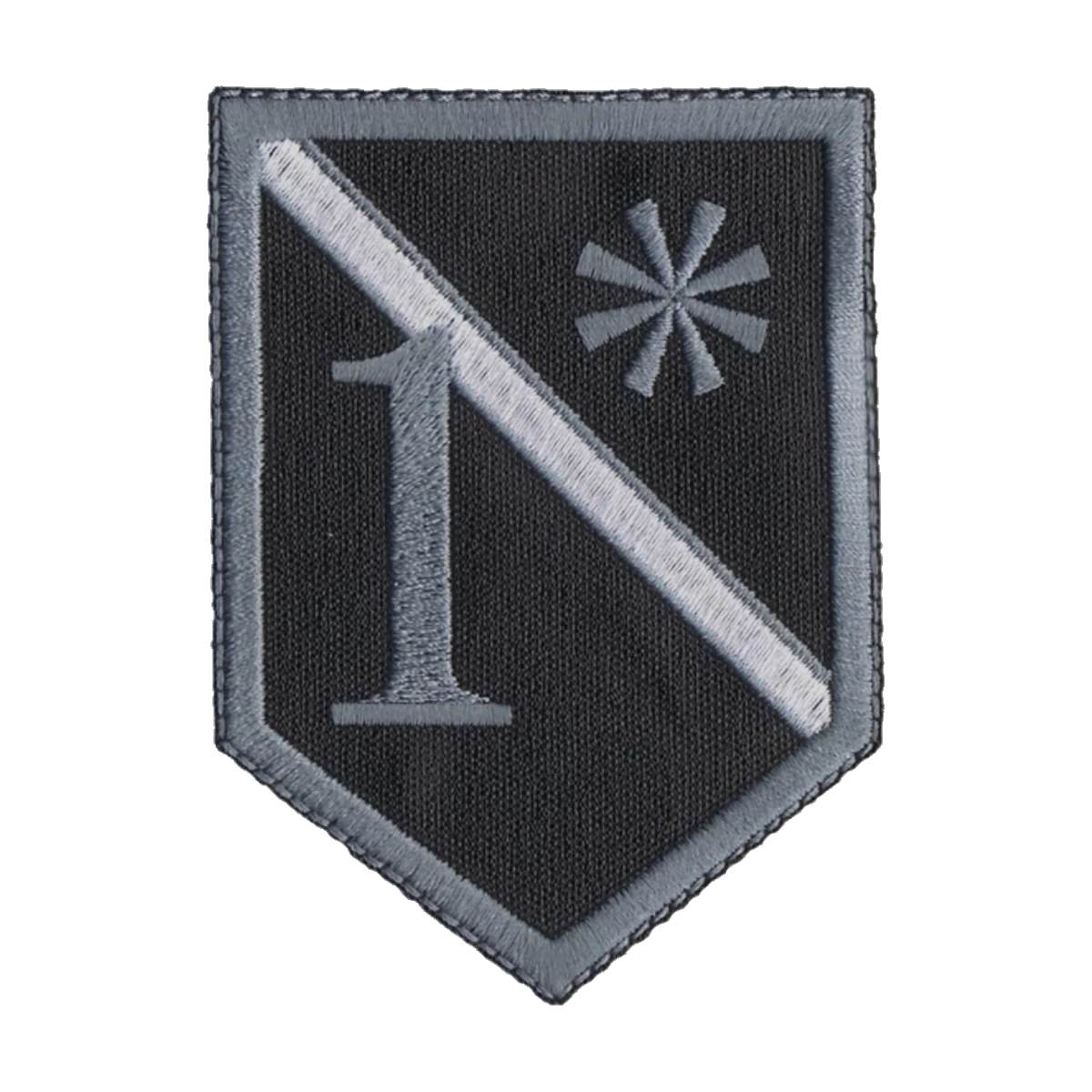 White
White
Service flag
 Blue
Blue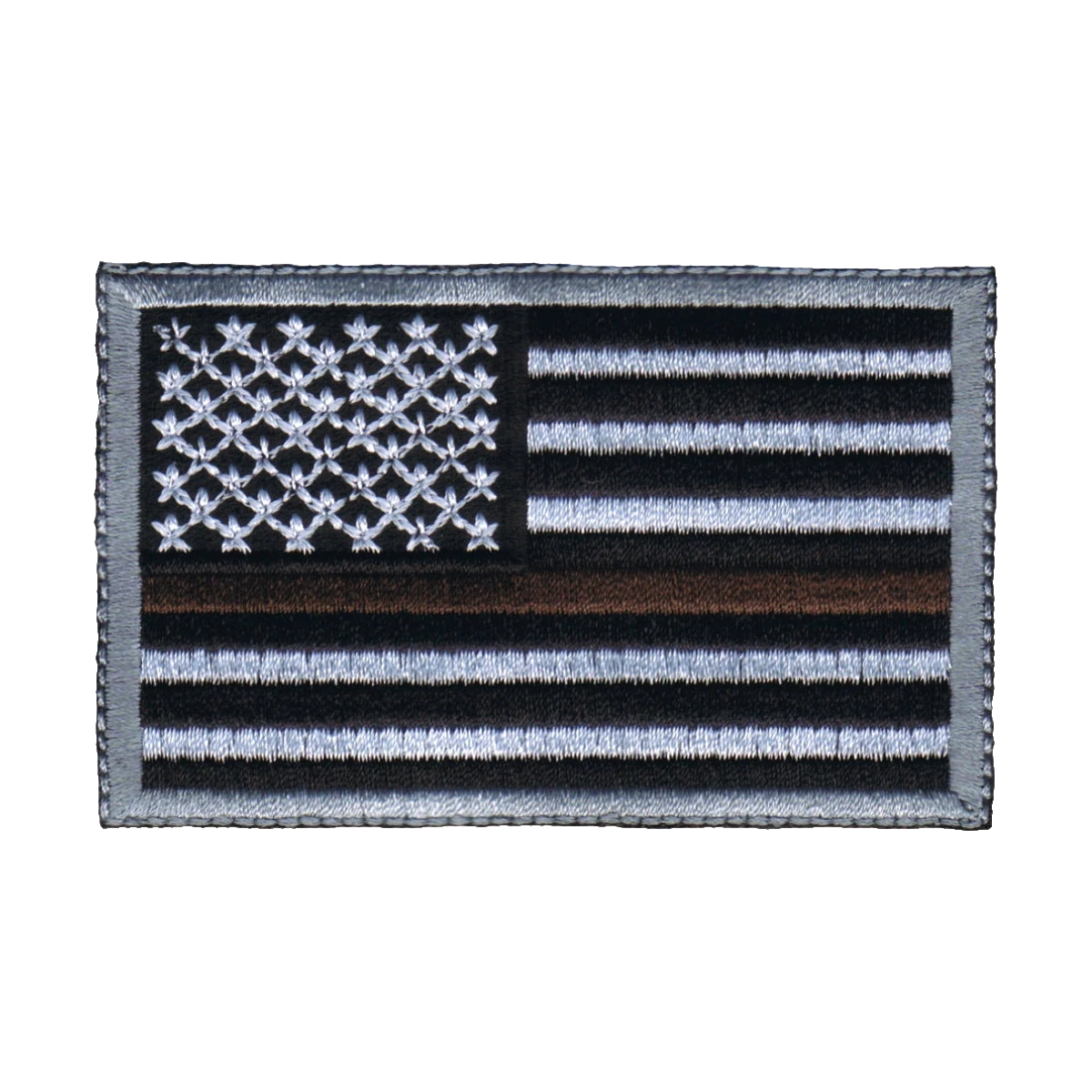 Brown
Brown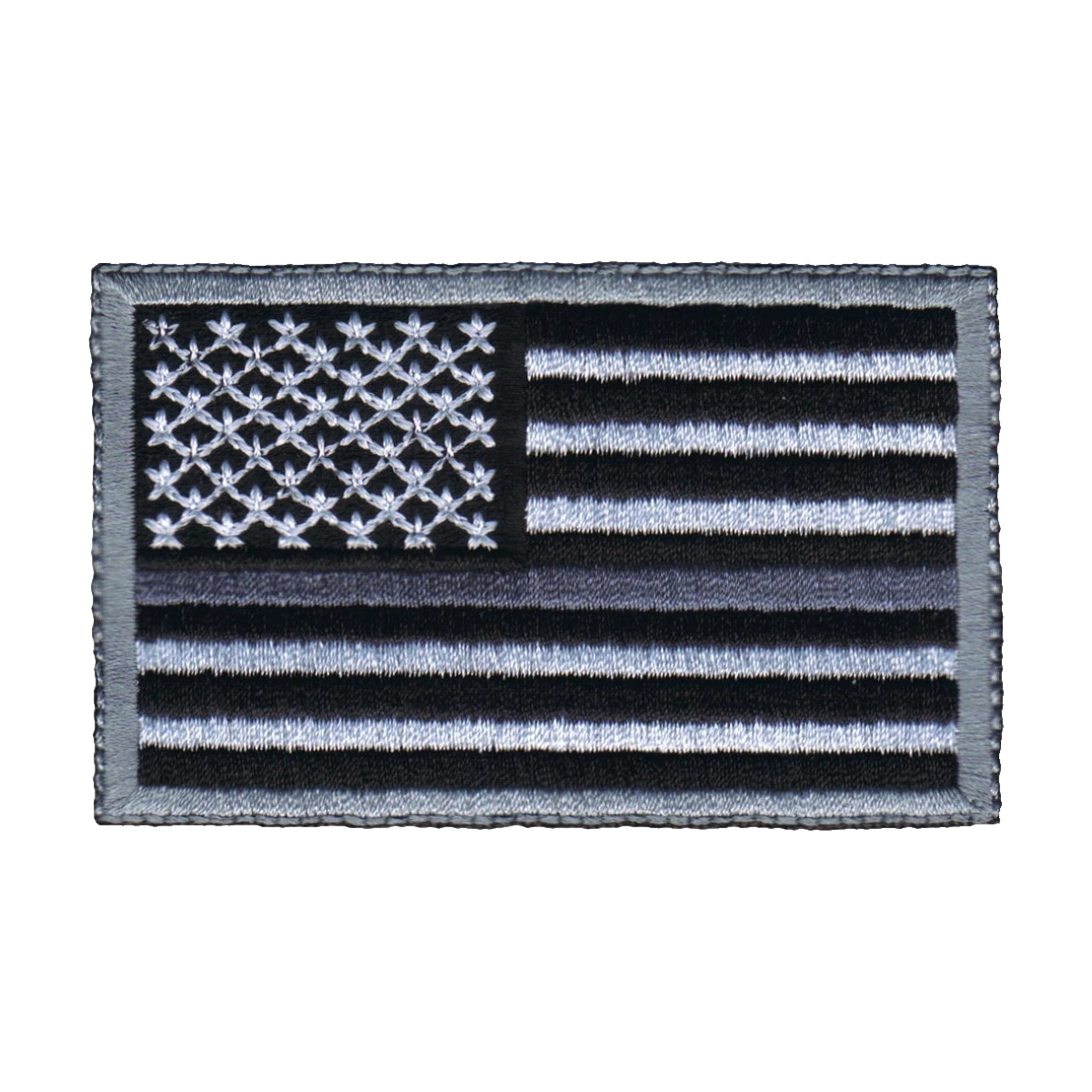 Gray
Gray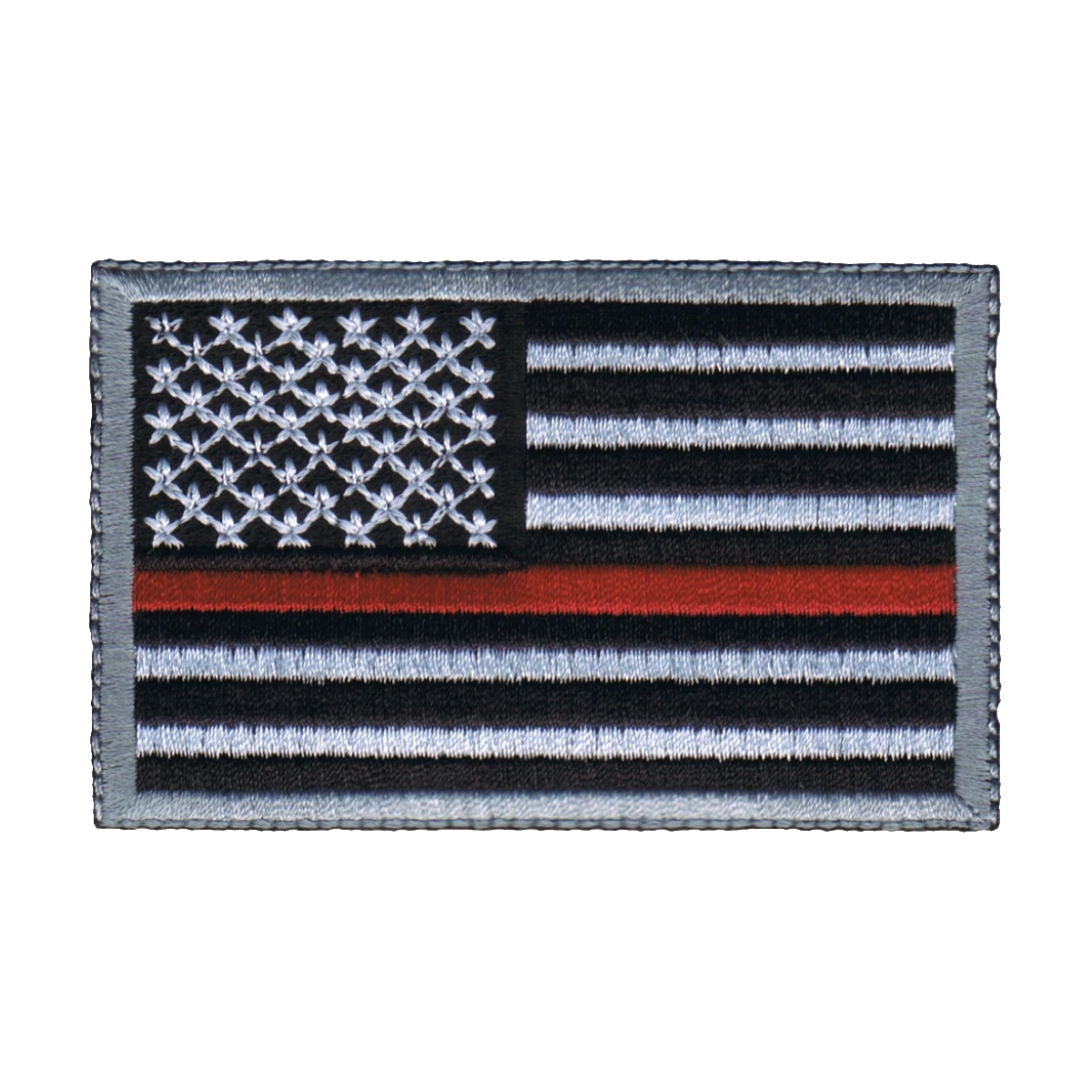 Red
Red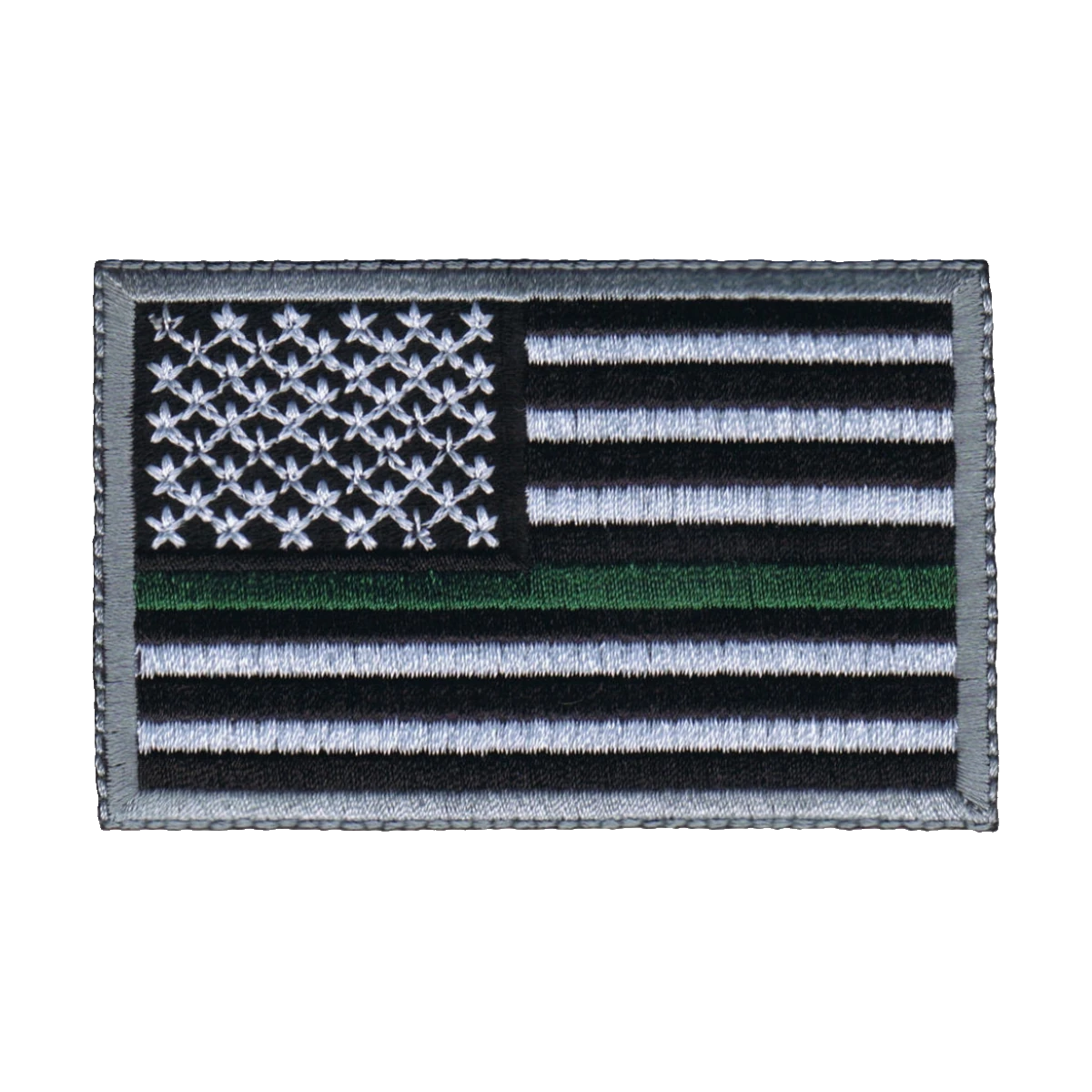 Green
Green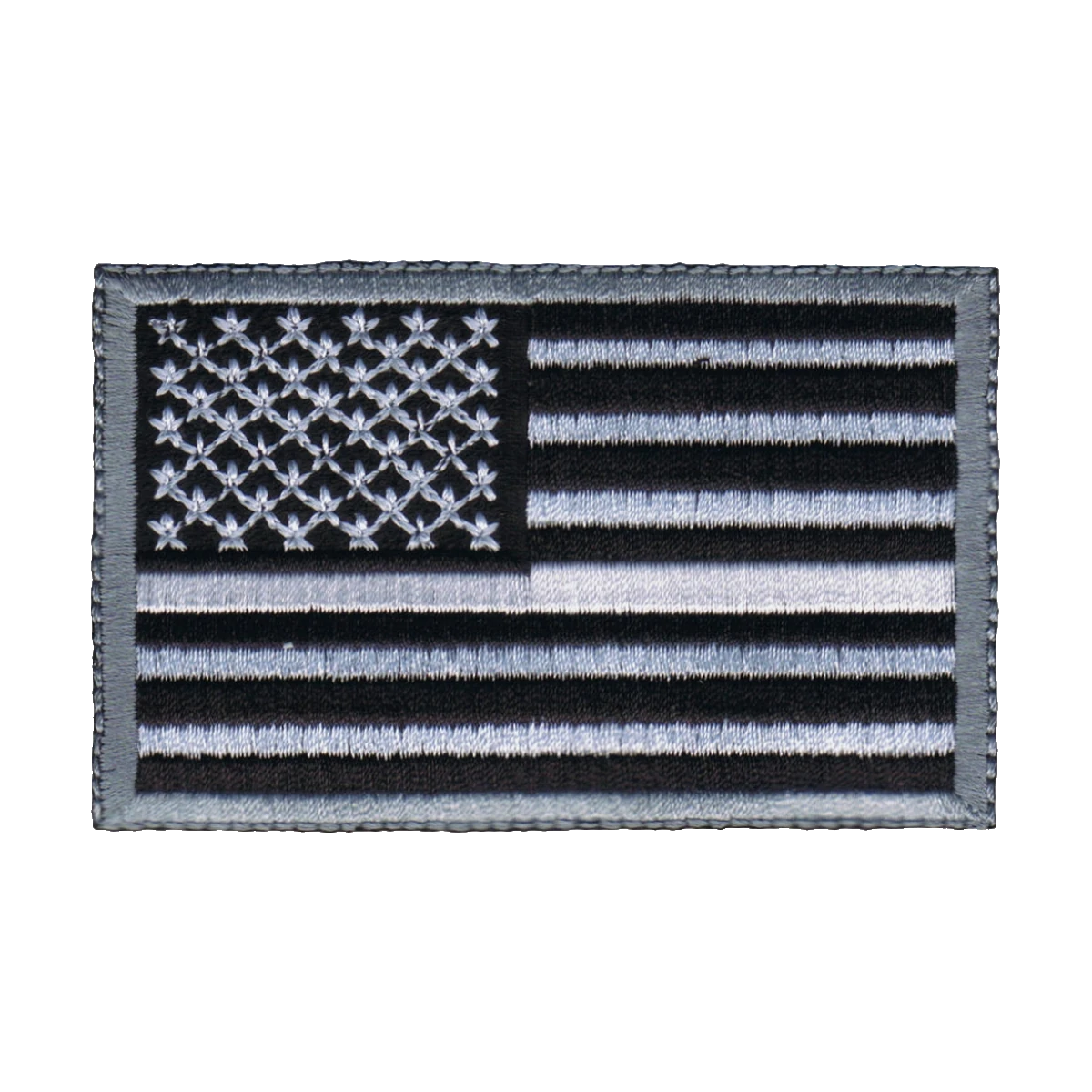 White
White
Give Respect, Get Respect
 Blue
Blue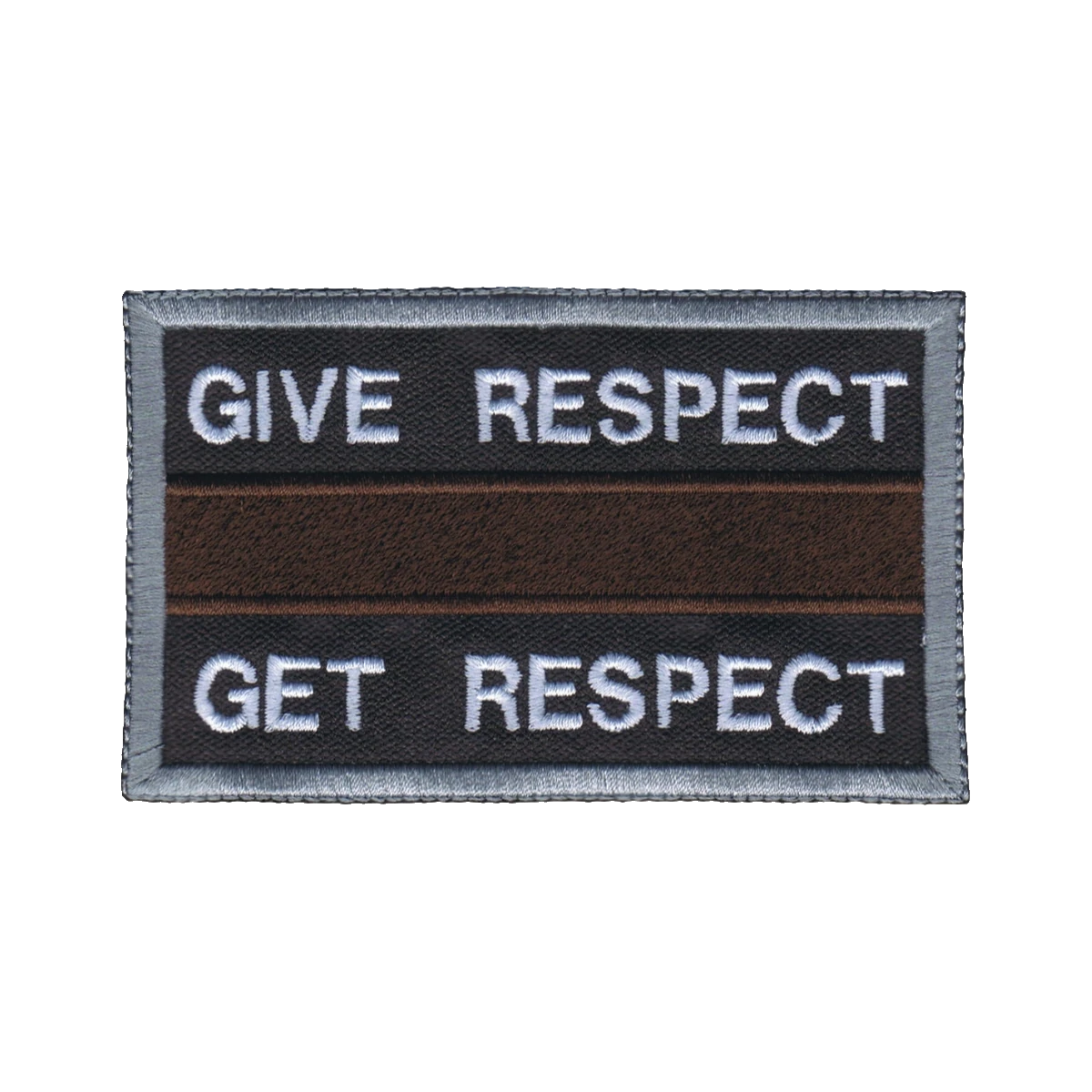 Brown
Brown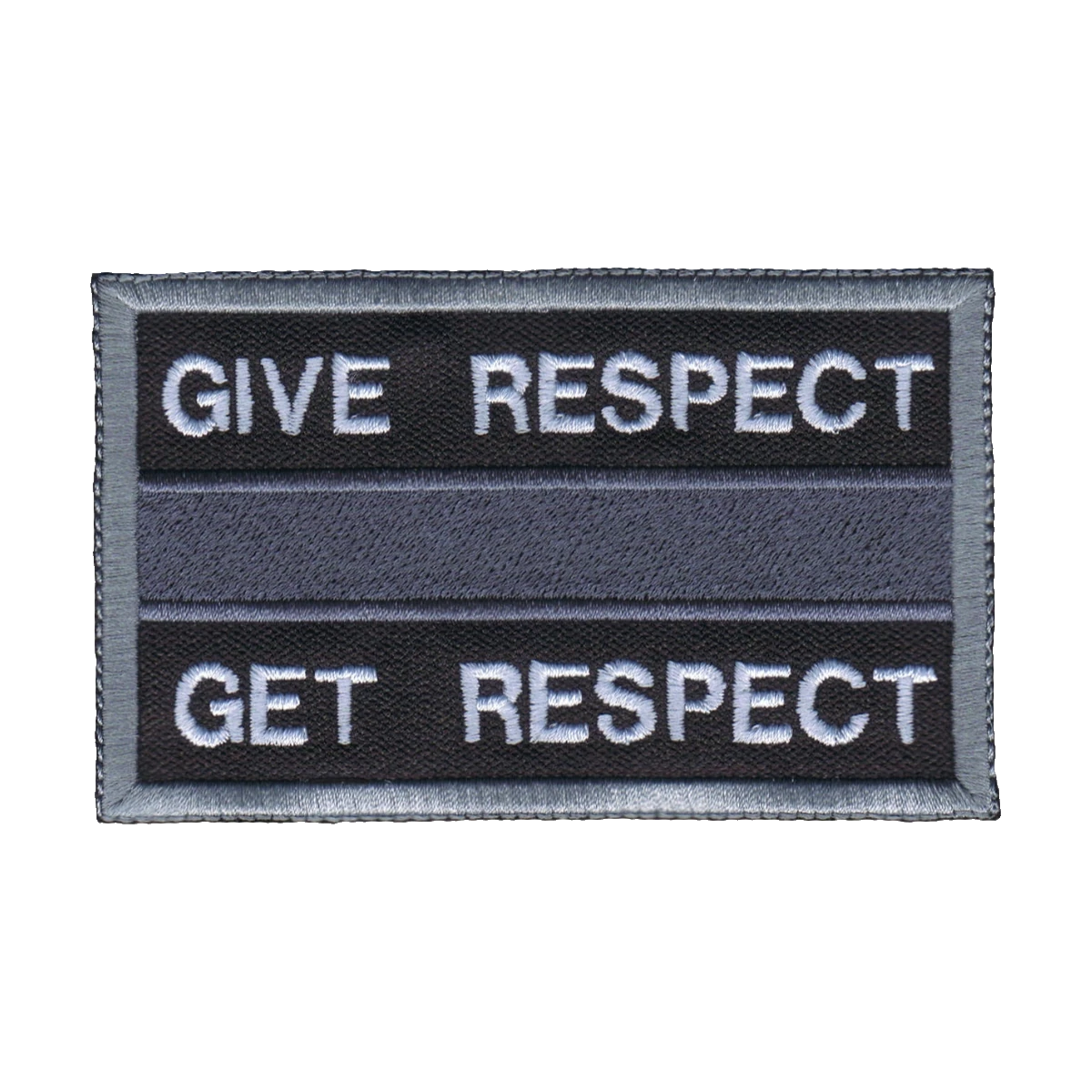 Gray
Gray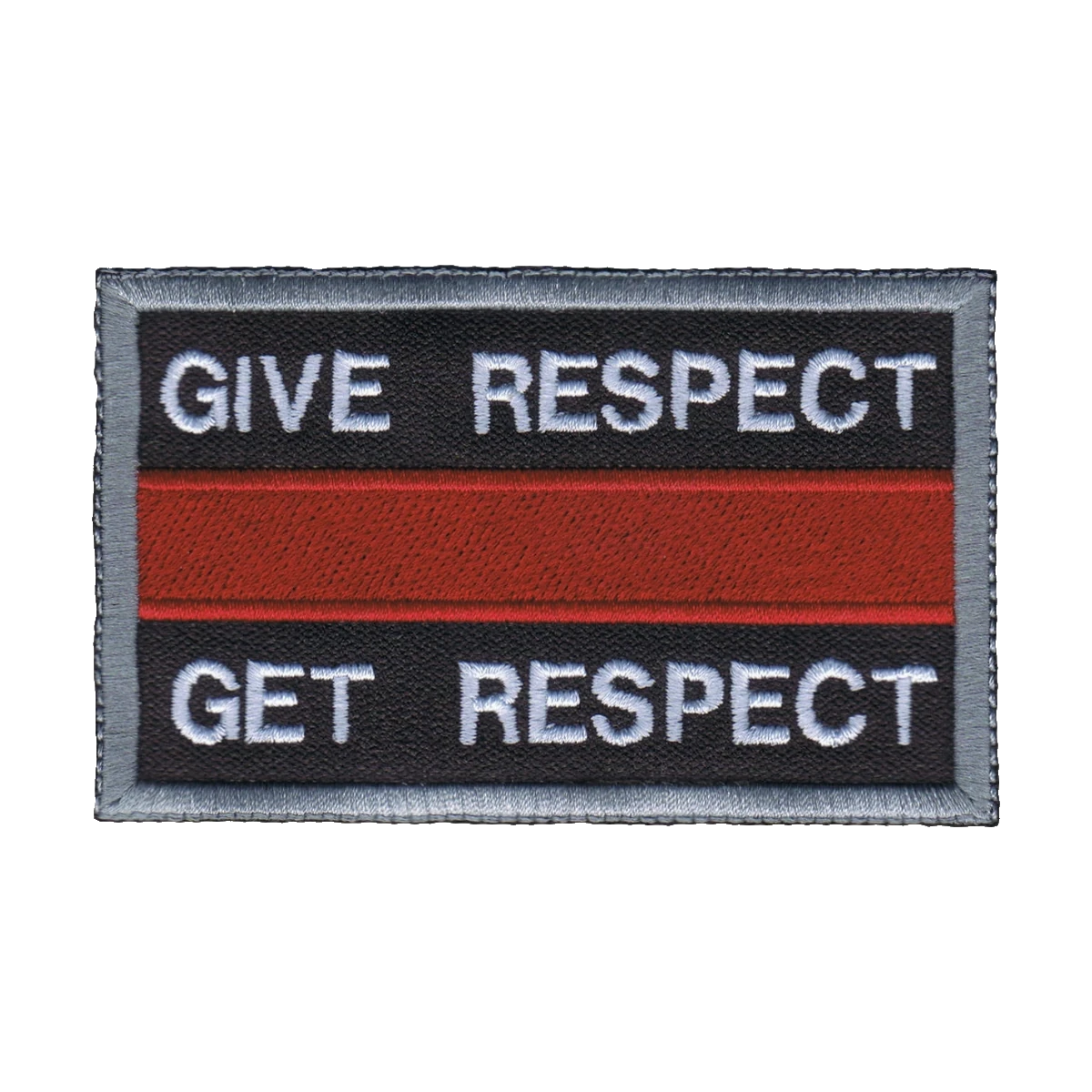 Red
Red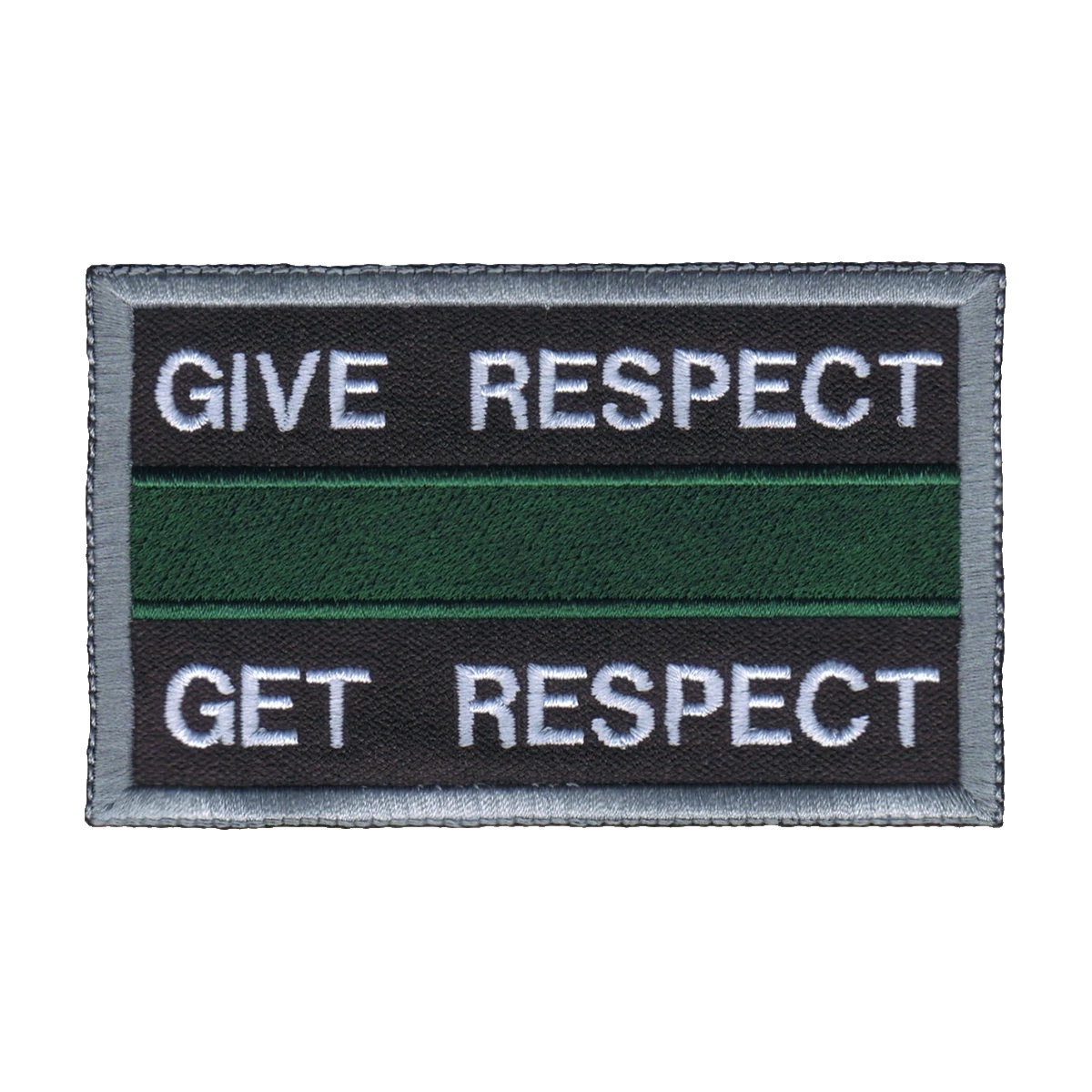 Green
Green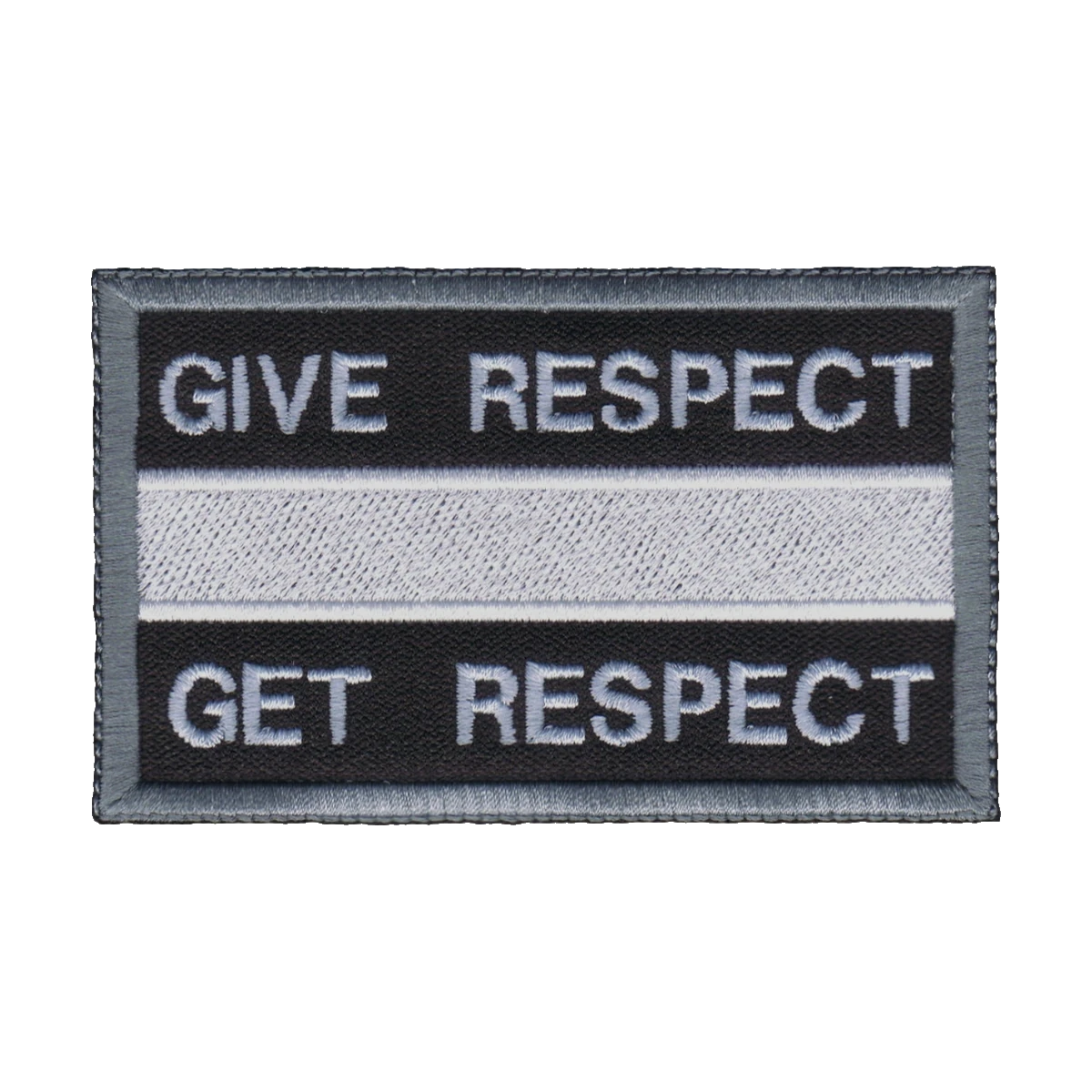 White
White